2000 Northside Crossing, Macon · Mon–Fri 8 a.m.–6 p.m. · No referral needed to start

Treatment at MVP Physio Dr.

Orthopedic Manual Therapy

Skilled hands-on treatment of joints, muscles and nerves to reduce pain and restore how you move.
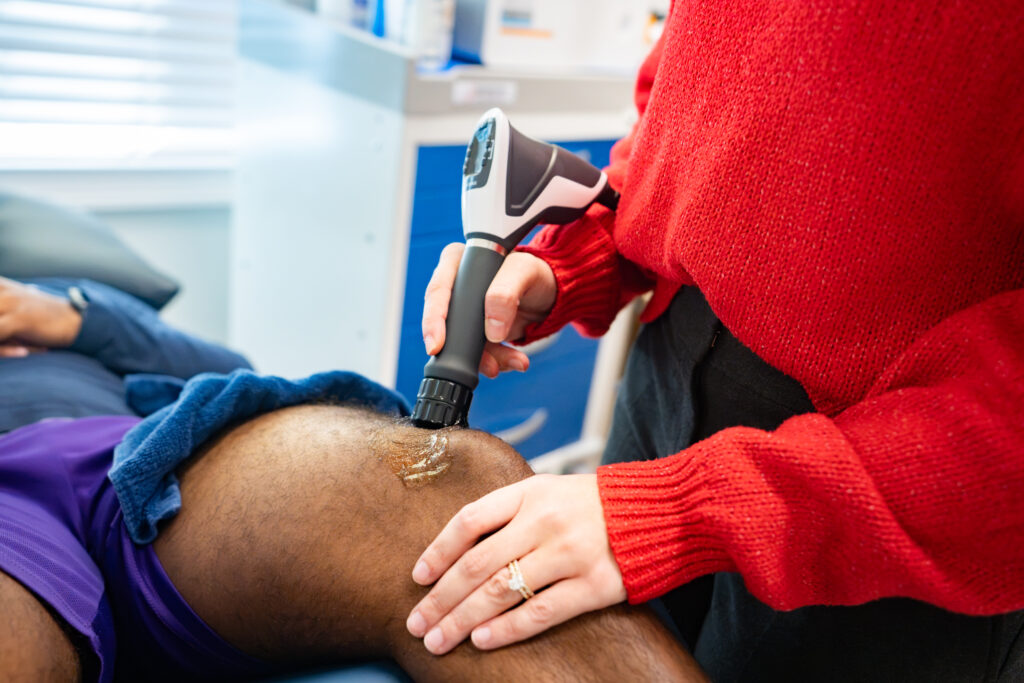
Doctor of Physical Therapy performing manual therapy on the knee

What it is

How it works

Manual therapy is the hands-on side of physical therapy. Our Doctors of Physical Therapy use specific techniques chosen from your examination: joint mobilization to restore motion, soft-tissue techniques to reduce tension, and nerve mobility work when nerves are involved.

Two of our most-used hands-on treatments have their own pages: spinal manipulation and myofascial manipulation.

Hands-on care calms pain and opens a window of better motion. Exercise is then used to keep that motion, which is why manual therapy at MVP is always paired with an individualized exercise program.

What it treats

Who it helps

  • Neck and low back pain
  • Mid-back and rib stiffness
  • Headaches from the neck
  • Shoulder stiffness and pain
  • Hip and knee stiffness
  • Ankle stiffness after sprains
  • Pain and stiffness after surgery or immobilization

What to expect

Your visit

Your doctor will test how each joint and tissue moves, then treat what the exam finds, adjusting pressure and technique to your comfort.

You will leave with exercises that build on what was done in the session.

By the numbers

81%of patients with hip arthritis improved with manual therapy, compared with 50% with exercise aloneArthritis Care & Research, 2004
8sessions of manual therapy plus exercise improved walking in knee arthritis, with benefits still present at one yearAnnals of Internal Medicine, 2000
1full hour, one-on-one, every visit at MVP Physio Dr.MVP Physio Dr.

Hands-on care, chosen from your exam

Manual therapy is not a massage or a routine. Your doctor tests how each joint, muscle and nerve moves, then uses the specific technique that fits what was found: joint mobilization or manipulation for stiffness, soft-tissue work for tension, and nerve mobility work when a nerve is irritated.

Research supports pairing hands-on treatment with exercise. In hip and knee arthritis, manual therapy combined with exercise improved pain, function and walking, with benefits lasting months after treatment ended.
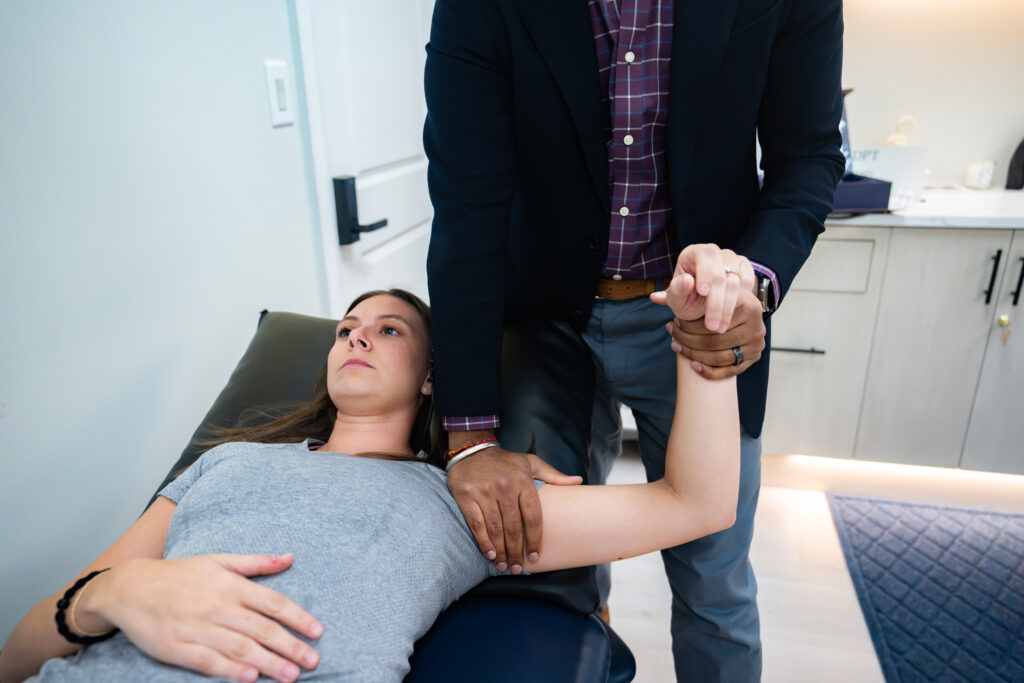
Hands-on treatment of the shoulder and neck

Techniques we use

01

Joint mobilization

Slow, graded movements to restore motion in stiff joints.

02

Spinal and joint manipulation

A quick, precise movement to a stiff joint when appropriate.

03

Myofascial manipulation

Hands-on release of tight muscle and fascia.

04

Nerve mobility

Gentle techniques that help irritated nerves glide.

05

Instrument-assisted soft tissue

Tools that treat thickened, irritated tissue.

06

Exercise to keep it

Every hands-on session is paired with exercise so the change lasts.
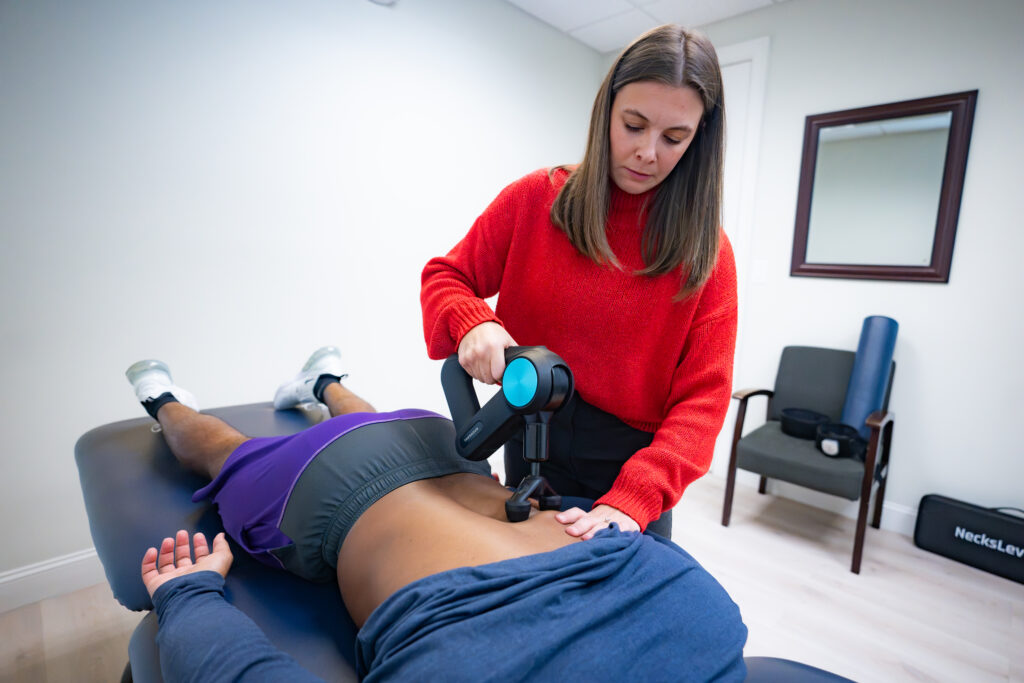
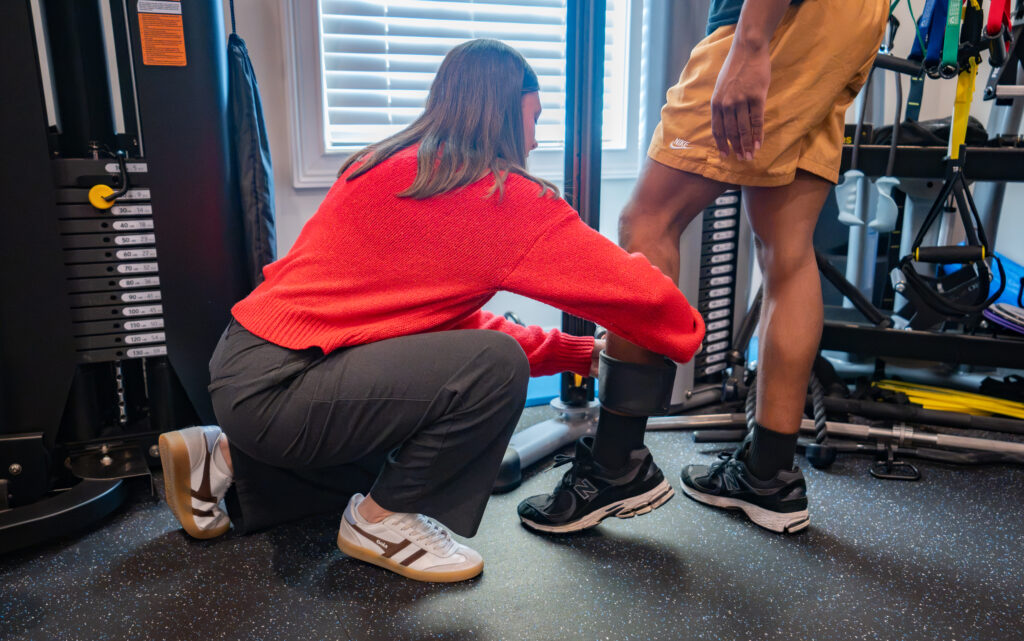
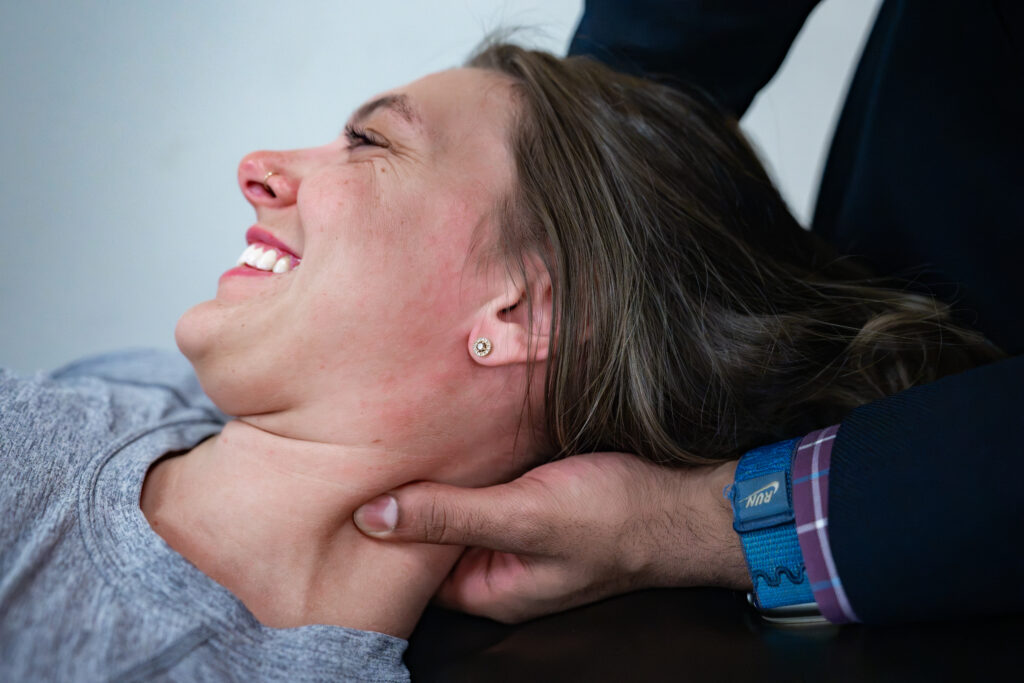
Hands-on treatment of the low backKnee examination by a Doctor of Physical TherapyHands-on treatment of the neck

By the numbers

The evidence

What the research says

In 109 adults with hip osteoarthritis, 81% of those treated with manual therapy reported improvement after five weeks, compared with 50% of those treated with exercise alone, with gains in pain, function and range of motion lasting to 29 weeks.

Hoeksma HL, et al. Comparison of manual therapy and exercise therapy in osteoarthritis of the hip: a randomized clinical trial. Arthritis Care & Research, 2004.

In 83 adults with knee osteoarthritis, eight sessions of manual physical therapy plus exercise improved walking distance and function compared with placebo, the benefit lasted at one year, and fewer patients in the treatment group went on to knee surgery.

Deyle GD, et al. Effectiveness of manual physical therapy and exercise in osteoarthritis of the knee: a randomized, controlled trial. Annals of Internal Medicine, 2000.

The American College of Physicians recommends non-drug treatment first for low back pain. For recent pain, its options include heat, massage, acupuncture and spinal manipulation; for chronic pain, exercise, multidisciplinary rehabilitation and spinal manipulation, among others.

Qaseem A, et al. Noninvasive treatments for acute, subacute, and chronic low back pain: a clinical practice guideline from the American College of Physicians. Annals of Internal Medicine, 2017.

A review of 26 randomized trials found moderate-quality evidence that spinal manipulation was associated with modest improvements in pain and function for acute low back pain. No trial reported a serious adverse event; temporary soreness or stiffness was common.

Paige NM, et al. Association of spinal manipulative therapy with clinical benefit and harm for acute low back pain: systematic review and meta-analysis. JAMA, 2017.

Questions

What patients ask us

Does manual therapy hurt?

It should not be painful. Some techniques on tender areas can be uncomfortable, and your doctor adjusts to what you can tolerate.

How is it different from massage?

Every technique is chosen from your exam to change how a specific joint, muscle or nerve moves, and it is always paired with exercise.

How long is a visit?

Every visit is a full hour, one-on-one with your Doctor of Physical Therapy, with the same doctor every time.

Do I need a referral?

No. In Georgia you can start with a Doctor of Physical Therapy without a physician’s referral. Call or text (478) 960-7077 to schedule.

Not sure this is the right treatment?

That is what your first visit is for. A Doctor of Physical Therapy examines you one-on-one, explains what they find, and recommends a plan built for you. No referral is needed to start.