2000 Northside Crossing, Macon · Mon–Fri 8 a.m.–6 p.m. · No referral needed to start

Treatment at MVP Physio Dr.

Musculoskeletal Ultrasound

Real-time imaging of muscles, tendons and ligaments during your exam, so your doctor can see the tissue — not just feel it.

What it is

How it works

Musculoskeletal (MSK) ultrasound uses sound waves to show soft tissue on screen in real time. Your doctor can look at a tendon, compare it with the other side, and watch it move.

Dr. Patel is a Certified Musculoskeletal Ultrasonographer through the American Academy of Manipulative Therapy and is the doctor who performs MSK ultrasound at MVP Physio Dr. He also uses it to guide dry needling precisely.

What it treats

Who it helps

  • Tendon pain in the shoulder, elbow, knee and ankle
  • Suspected muscle strains
  • Plantar fascia thickening
  • Guiding dry needling to a precise target
  • Tracking how tissue changes over a plan of care

What to expect

Your visit

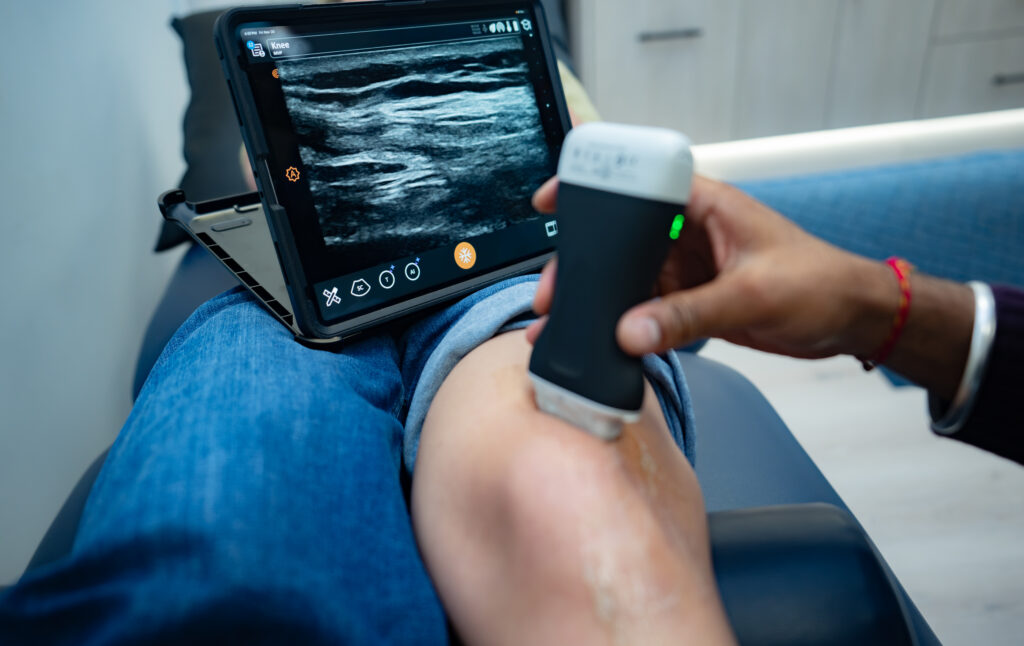
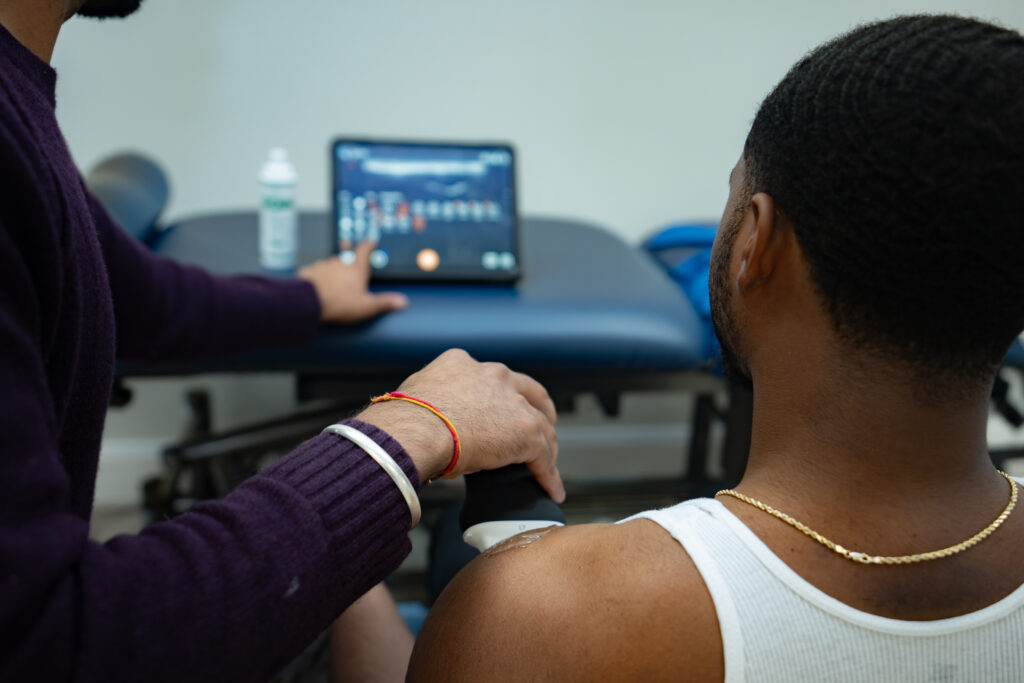
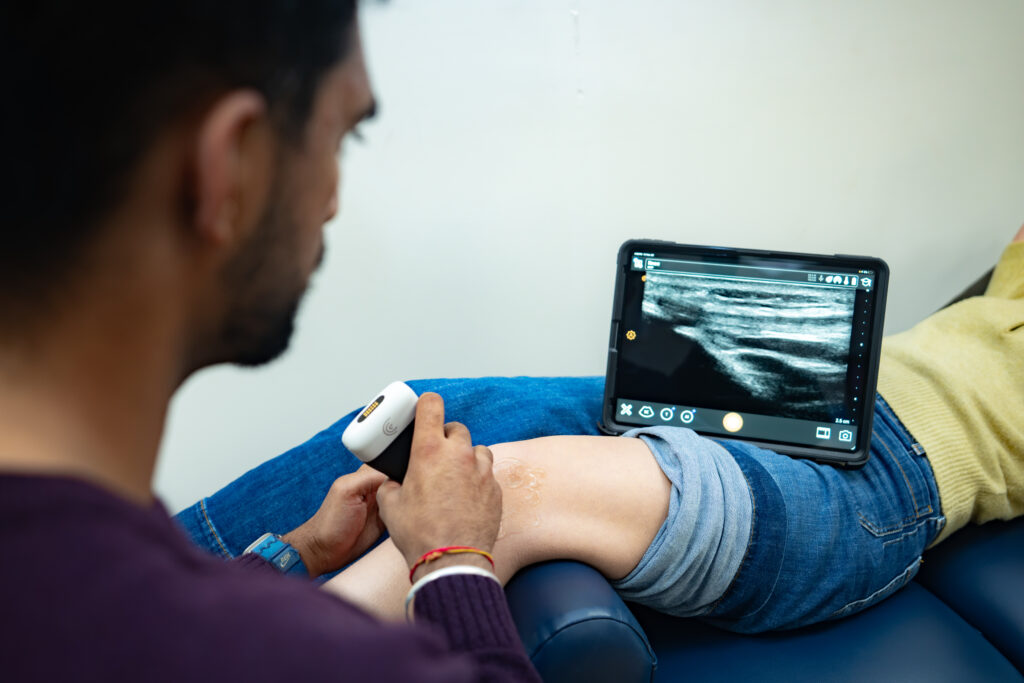
Gel is applied and a small probe is moved over the area. It is painless, uses no radiation and takes a few minutes. Your doctor will show you what they see on the screen and explain what it means for your treatment.

Ultrasound in our clinic informs your physical therapy care. If something needs a physician’s diagnostic imaging or opinion, we will tell you and help coordinate it.

By the numbers

92%sensitivity of ultrasound for full-thickness rotator cuff tears, similar to MRICochrane Review, 2013
0radiation. Ultrasound uses sound waves onlyMVP Physio Dr.
2levels of musculoskeletal ultrasound certification held by Dr. Patel through the American Academy of Manipulative TherapyMVP Physio Dr.

See it, then treat it

Musculoskeletal ultrasound lets your doctor look at tendons, muscles and ligaments in real time, compare them with the other side, and watch them move. For full-thickness rotator cuff tears, a Cochrane review found ultrasound about as accurate as MRI.

At MVP Physio Dr., ultrasound informs your treatment plan and guides dry needling to a precise target. If imaging shows something that needs a physician, we refer you.
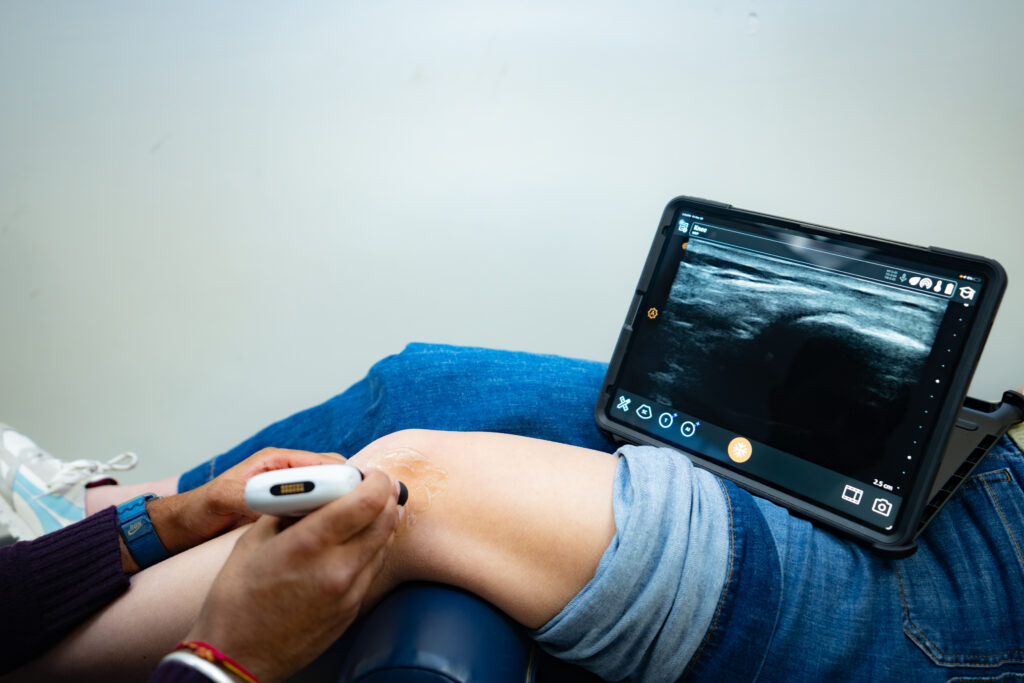
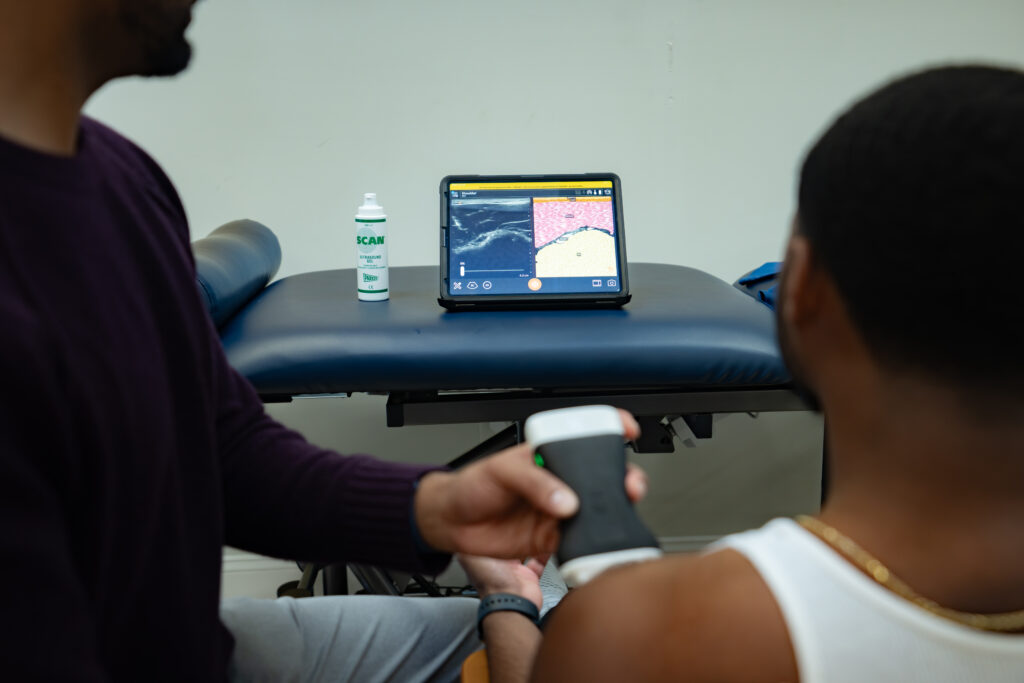
Musculoskeletal ultrasound of the knee with the image on screen
Ultrasound scan of the shoulderUltrasound probe and real-time image of the kneeReviewing the shoulder ultrasound image with a patient

Your scan

  1. Exam

    Your doctor examines you first and decides whether ultrasound will help.

  2. Scan

    Gel and a small probe on the skin. Painless, a few minutes.

  3. Explain

    You see what your doctor sees, on screen, with an explanation.

  4. Plan

    Findings shape your treatment, and repeat scans can track change.

By the numbers

The evidence

What the research says

A Cochrane review found that ultrasound and MRI have similar accuracy for detecting full-thickness rotator cuff tears: ultrasound sensitivity 92% and specificity 93%, compared with 94% and 93% for MRI. The authors noted the evidence base was limited by small studies.

Lenza M, et al. Magnetic resonance imaging, magnetic resonance arthrography and ultrasonography for assessing rotator cuff tears in people with shoulder pain for whom surgery is being considered. Cochrane Database of Systematic Reviews, 2013.

Questions

What patients ask us

Is this a replacement for an MRI?

No. It is a tool your doctor uses during your exam and treatment. If an MRI or a physician’s evaluation is needed, we will say so.

Does it hurt?

No. You may feel light pressure from the probe.

Do I need a referral?

No. In Georgia you can start with a Doctor of Physical Therapy without a physician’s referral. Call or text (478) 960-7077 to schedule.

Not sure this is the right treatment?

That is what your first visit is for. A Doctor of Physical Therapy examines you one-on-one, explains what they find, and recommends a plan built for you. No referral is needed to start.