
One sprain should not become a weak ankle
About 2 million ankle sprains happen in the U.S. every year, and up to 70% of people go on to have lingering problems such as pain, weakness or the ankle giving way. Mayo Clinic says strengthening the ankle muscles is key to supporting the joint and preventing future sprains, and that balance exercises help the muscles work together.
Foot pain is just as common. Cleveland Clinic reports that more than 2 million people in the U.S. are treated for plantar fasciitis each year. Whether it is your ankle, heel, arch or Achilles, the fix usually starts with how the foot and lower leg handle load.
By the numbers
Signs your foot or ankle needs a closer look
- An ankle that keeps rolling or feels unstable
- Heel pain with your first steps in the morning
- Achilles or arch pain that is not going away
You do not need a referral to start. If anything in your exam suggests you need an X-ray or a physician first, we will tell you.
Common conditions we treat
- Ankle sprains and chronic ankle instability
- Plantar fasciitis (plantar heel pain)
- Achilles tendon pain and ruptures
- Posterior tibial tendon problems and flat-foot pain
- Shin splints and stress reactions
- Turf toe and big-toe pain
- Ankle arthritis
- Rehabilitation after ankle fracture, Achilles repair or ankle surgery
Balance training is not optional
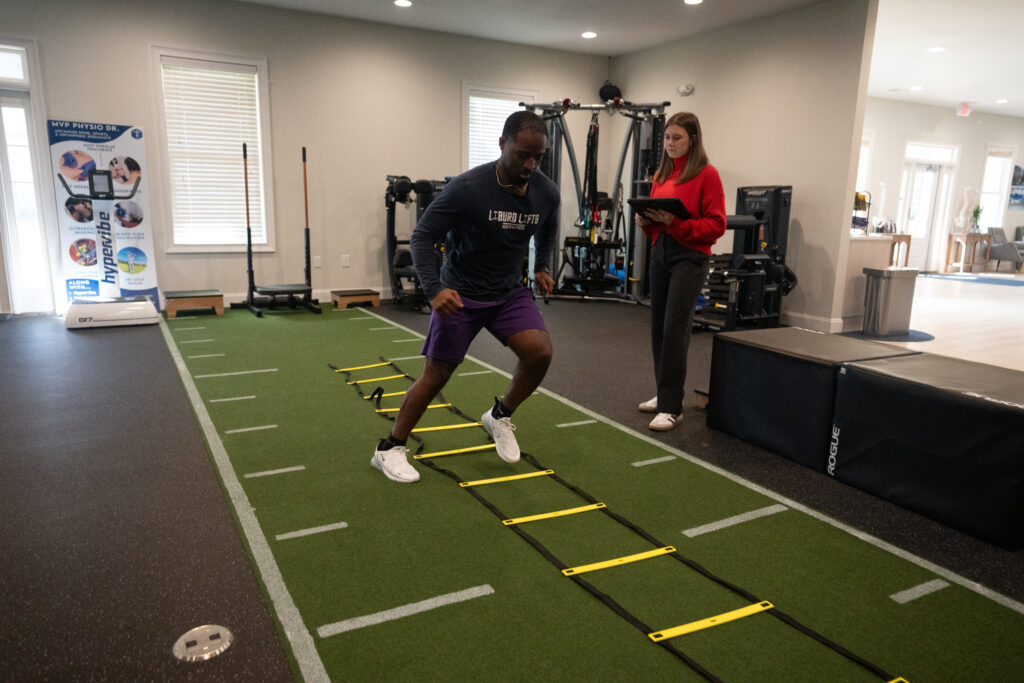
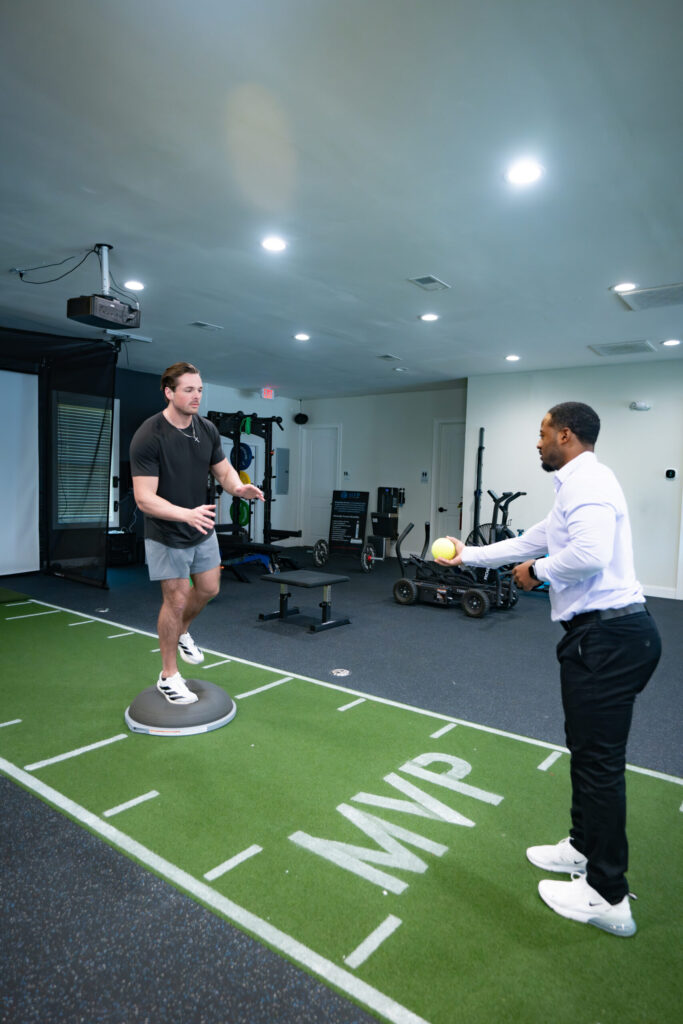
Research reviews show that exercise therapy lowers the odds of spraining the same ankle again by about 41%, and exercise-based prevention programs cut ankle sprain risk by 28%. Balance and reaction training retrains the muscles and nerves around the ankle to respond quickly.
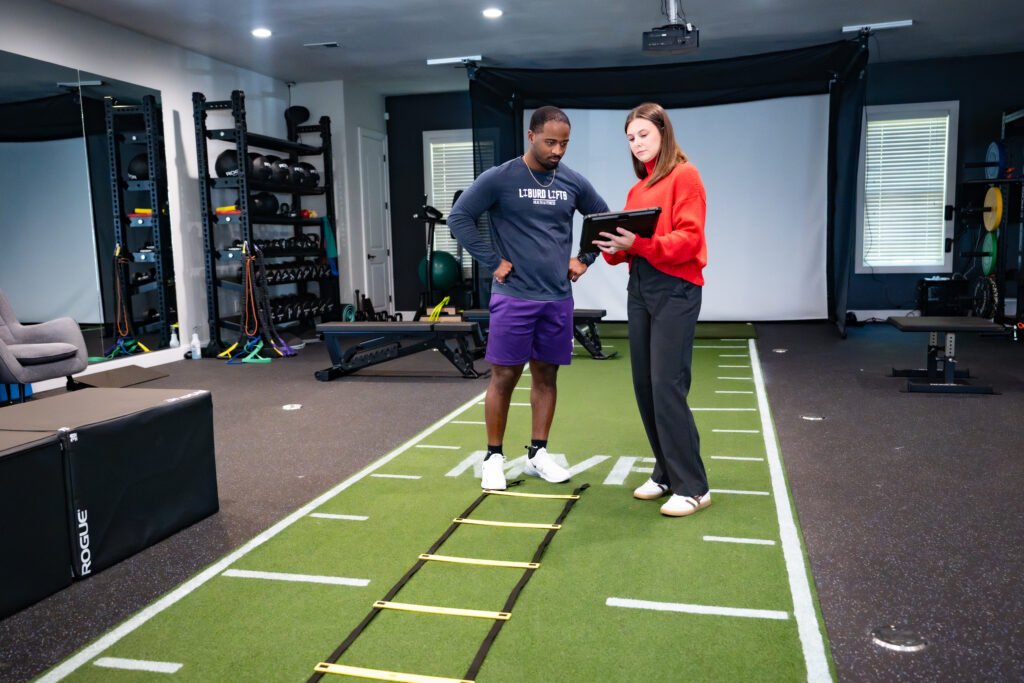
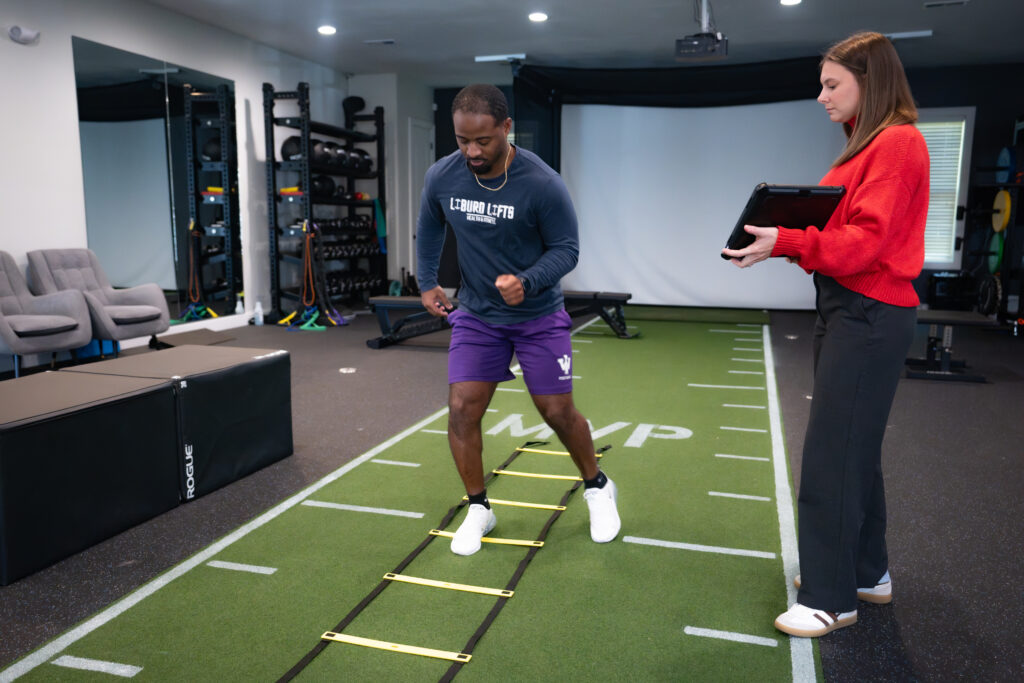
That is why ankle care at MVP Physio Dr. includes balance, hopping and reaction drills on our turf, not just a sheet of home exercises.
How we evaluate your foot and ankle
Your first visit is a full hour, one-on-one.
Your story and goals
How it happened, what it stops you doing, and what you want to get back to.
Ligament and tendon tests
Hands-on tests for the ankle ligaments, Achilles and the tendons of the foot.
Ankle motion
Especially how far your ankle bends forward, which affects squatting, running and landing.
Calf and foot strength
Measured side to side, including how many single-leg calf raises you can do.
Balance and hop testing
Single-leg balance, reach and hop tests that show how the ankle performs under load.
Shoes and footwear
What you wear for work and sport, and whether orthotics could help.
Your foot and ankle program
-
Protect and calm
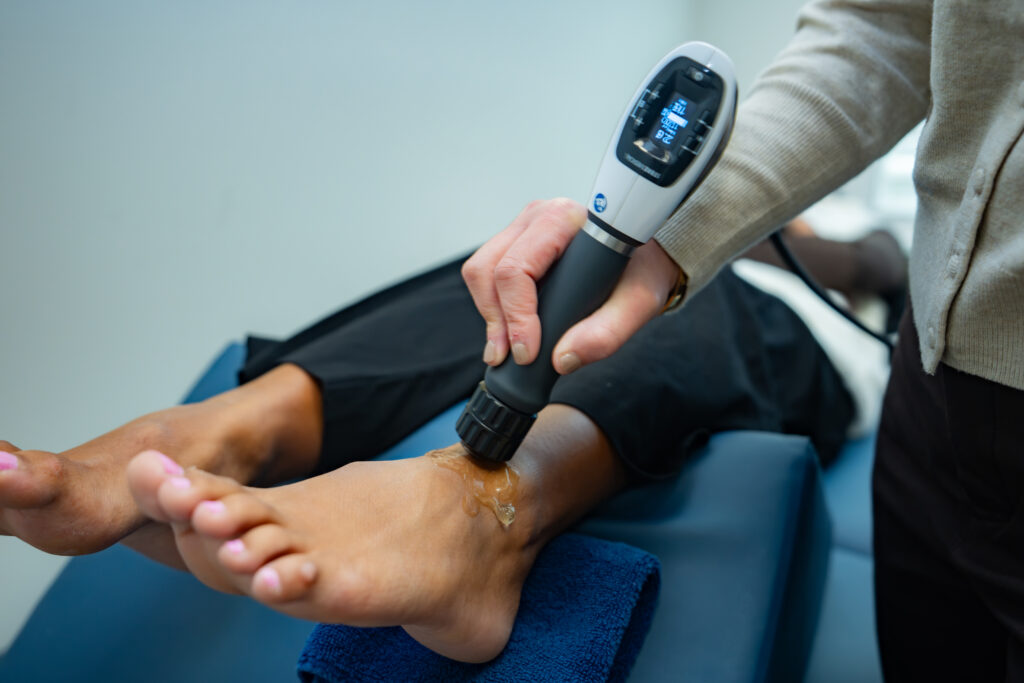
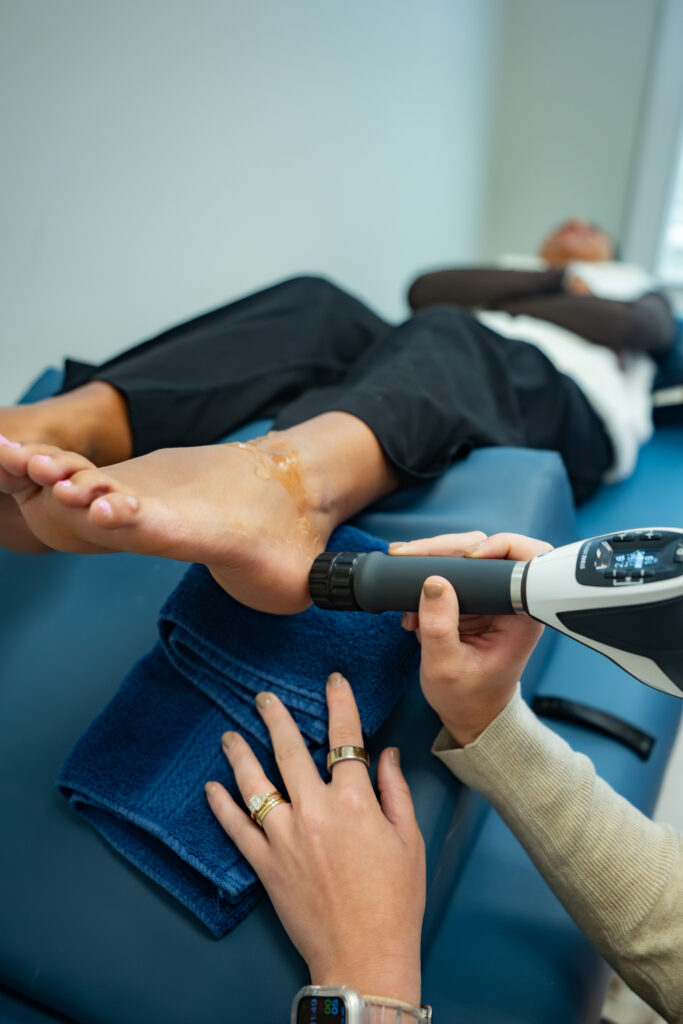
Settle pain and swelling, with hands-on treatment, dry needling or shockwave when appropriate.
-
Restore motion
Get the ankle bending and the foot moving normally again.
-
Strengthen
Calf, foot and hip strengthening that builds tendon capacity.
-
Balance and react
Single-leg balance, reaction and agility drills on our turf.
-
Return
Running, jumping and cutting, tested before you go back to full sport.
Treatments that often help
Athlete? See MVP Athlete.
What the research says
An overview of systematic reviews found that exercise therapy reduced the odds of a repeat ankle sprain (odds ratio 0.59), and that bracing or taping also helped prevent recurrence.
About 2 million acute ankle sprains occur each year in the U.S., and up to 70% of people may develop lingering disability. Exercise-based prevention programs reduced ankle sprain risk by 28% and all ankle injuries by 47%.
What leading medical centers say
Mayo Clinic says strengthening the ankle muscles is key to supporting the joint and preventing future sprains, that balance exercises such as standing on one leg retrain the muscles to work together, and that movement tests can confirm the ankle is ready before you return to sport.
Cleveland Clinic reports that more than 2 million people in the U.S. are treated for plantar fasciitis each year, that stretching the foot and calf is part of treatment, and that surgery is very rarely needed.