
Neck pain is common, and very treatable
Cleveland Clinic estimates that neck pain affects 10% to 20% of adults, and notes that most causes improve with conservative treatment, including exercise. Worldwide, about 203 million people were living with neck pain in 2020.
Long hours at a desk or on a phone, stress, sleep position, old injuries and wear-and-tear changes all play a part. A Doctor of Physical Therapy can sort out which of these is driving your pain and give you a clear plan to fix it.

By the numbers
Signs your neck needs a closer look
- Pain or stiffness that has not improved in a week or two
- Headaches that start at the base of the skull
- Pain, tingling or numbness traveling into the arm
You do not need a referral or an MRI to start. If anything in your exam suggests you need imaging or a physician first, we will tell you.
Common conditions we treat
- Mechanical neck pain and stiffness
- Pinched nerve (cervical radiculopathy)
- Headaches that start in the neck (cervicogenic headache)
- Whiplash and car-accident injuries
- Disc bulges and herniations
- Neck arthritis
- Posture-related neck and upper back pain
- Rehabilitation after neck surgery
Why the upper back and shoulders matter
Cleveland Clinic points out that a forward head position strains the neck, and recommends strengthening the upper back with exercises such as shoulder-blade squeezes and rows. A Cochrane review found that strengthening the neck, shoulder and shoulder-blade muscles helps chronic neck pain and neck-related headaches.
So we rarely treat the neck alone. Your plan usually includes the upper back, shoulder blades and how you sit, work and sleep.
How we evaluate your neck
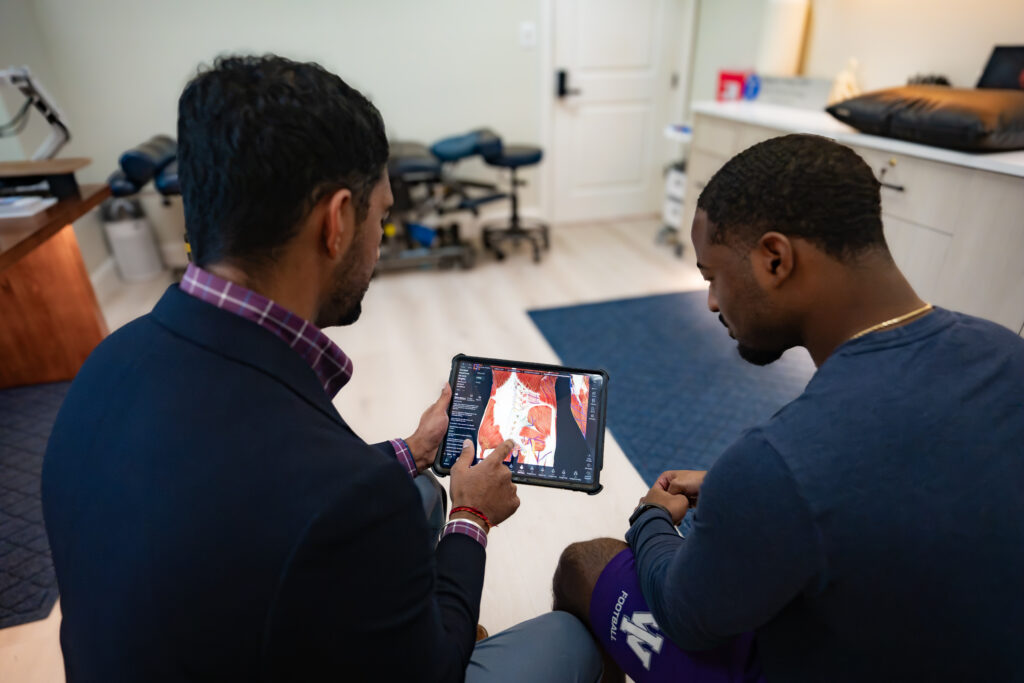
Your first visit is a full hour, one-on-one.
Your story and red flags
When it started, what makes it better or worse, and a screen for warning signs that need a physician.
Motion testing
Which neck movements bring on your pain and which relieve it.
Nerve check
Strength, reflexes and sensation in your arms to see whether a nerve is involved.
Upper back and shoulder blades
Stiffness and weakness below the neck often drive neck pain.
Deep neck muscle endurance
How well the small stabilizing muscles hold your head up.
Desk, phone and sleep habits
Your daily positions, so the plan fits your real day.



Your neck program
-
Calm it down
Hands-on treatment, spinal or soft-tissue techniques and dry needling when appropriate, starting at the first visit.
-
Move again
Restore comfortable motion in the neck and upper back.
-
Strengthen
Deep neck, upper back and shoulder-blade strengthening, the approach with the strongest research support.
-
Fix the daily triggers
Simple changes to your desk, phone use and sleep setup.
-
Keep it away
A short home program that keeps your neck strong.
Treatments that often help
Headaches, dizziness or a recent concussion? See Concussion Care.
What the research says
A Cochrane review of 27 trials found moderate-quality evidence that strengthening exercises for the neck, shoulders and shoulder blades help chronic neck pain, and that strengthening and endurance exercise helps headaches that start in the neck. Stretching alone showed little effect.
About 203 million people worldwide had neck pain in 2020, and the number is projected to reach 269 million by 2050.
What leading medical centers say
Mayo Clinic notes that physical therapy can teach you how to improve your posture and strengthen the muscles that support your neck, and may include heat, ice and other measures to ease pain.
Cleveland Clinic says most causes of neck pain improve with conservative treatment, including exercise, and recommends strengthening the upper back to counter the forward head position that strains the neck.