2000 Northside Crossing, Macon · Mon–Fri 8 a.m.–6 p.m. · No referral needed to start

Treatment at MVP Physio Dr.

Vestibular & Balance

Treatment for vertigo, dizziness and balance problems — including BPPV, the most common cause of spinning vertigo.
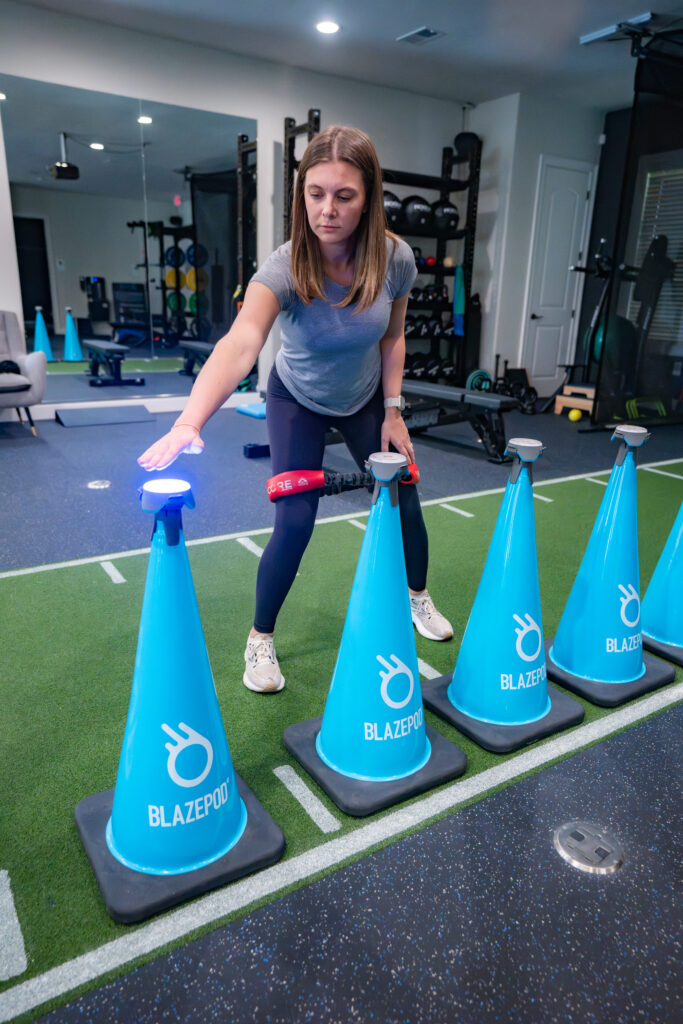
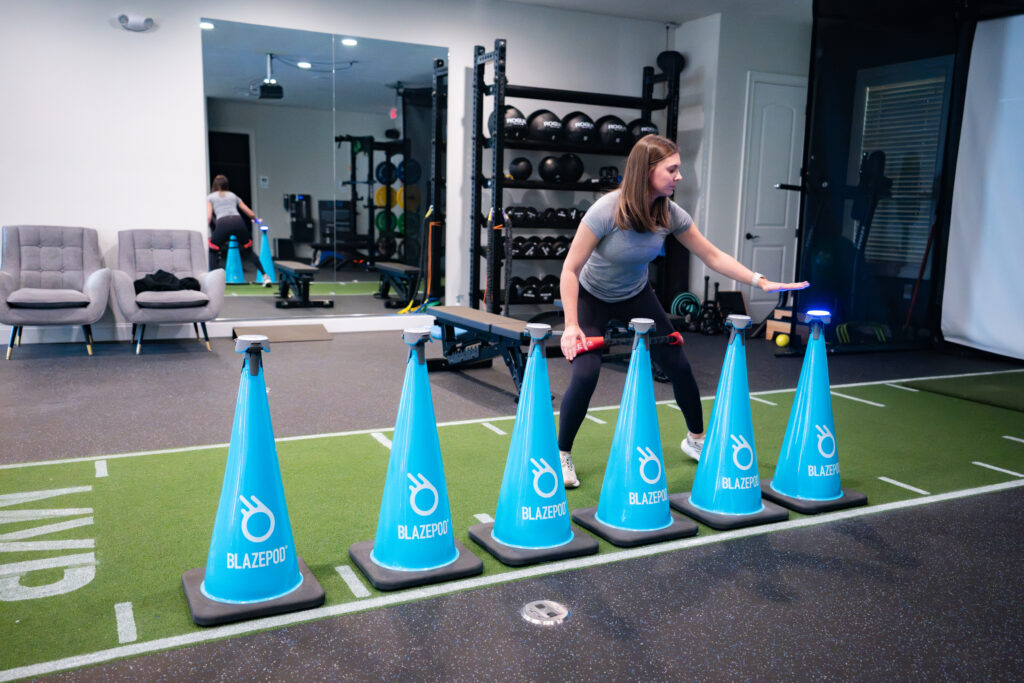
Balance and reaching drill with cones

What it is

How it works

Your inner ear, eyes and body work together to keep you balanced. When one part is not working well, dizziness, unsteadiness and falls can follow.

Vestibular rehabilitation identifies the cause and treats it directly. For BPPV, that often means a specific series of head positions to move displaced crystals in the inner ear.

Every doctor at MVP Physio Dr. is trained in orthopedics and balance rehabilitation. Dr. Gabi Mills and Dr. Maddie Brannen focus especially on balance and strengthening for older adults, and Dr. Maddie also on neurological conditions such as Parkinson’s disease.

What it treats

Who it helps

  • Benign paroxysmal positional vertigo (BPPV)
  • Dizziness with head movement
  • Unsteadiness and fear of falling
  • Balance problems with aging
  • Inner ear (vestibular) weakness
  • Dizziness after concussion
  • Balance problems with Parkinson’s disease and other neurological conditions

What to expect

Your visit

Your exam tests eye movements, head positions, balance and walking. Treatment may include repositioning maneuvers, gaze and balance exercises, and strength work, with a home program between visits.

By the numbers

1 in 4adults 65 and older falls each yearCDC
23%fewer falls in older adults who did structured exercise, across 108 clinical trialsCochrane Review, 2019
35%of U.S. adults 40 and older have inner-ear balance dysfunctionArchives of Internal Medicine, 2009
39clinical trials support vestibular rehabilitation as safe and effectiveCochrane Review, 2015

Balance can be trained

Balance depends on three systems working together: your inner ear, your vision, and the sensors in your feet and joints, plus the strength to react when something goes wrong. When any of them weakens, from aging, an inner-ear problem, a concussion or inactivity, steadiness suffers.

The good news is that balance responds to training. A Cochrane review of 108 trials found that structured exercise, especially balance and functional training, reduced falls in older adults by 23%. Vestibular rehabilitation, reviewed across 39 trials, is a safe and effective treatment for dizziness from inner-ear problems.
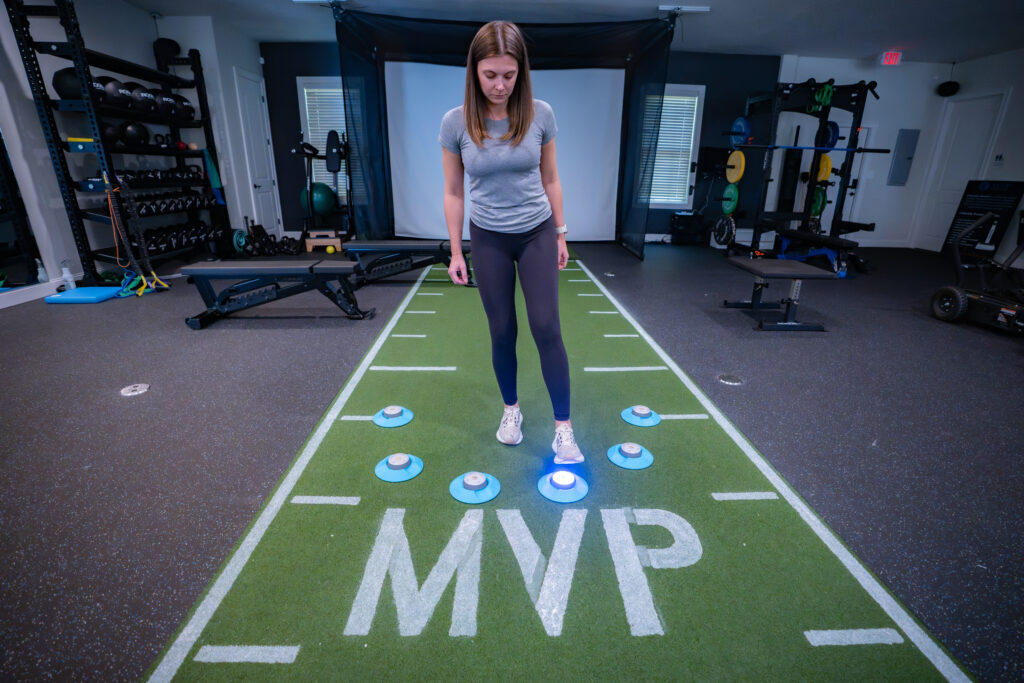
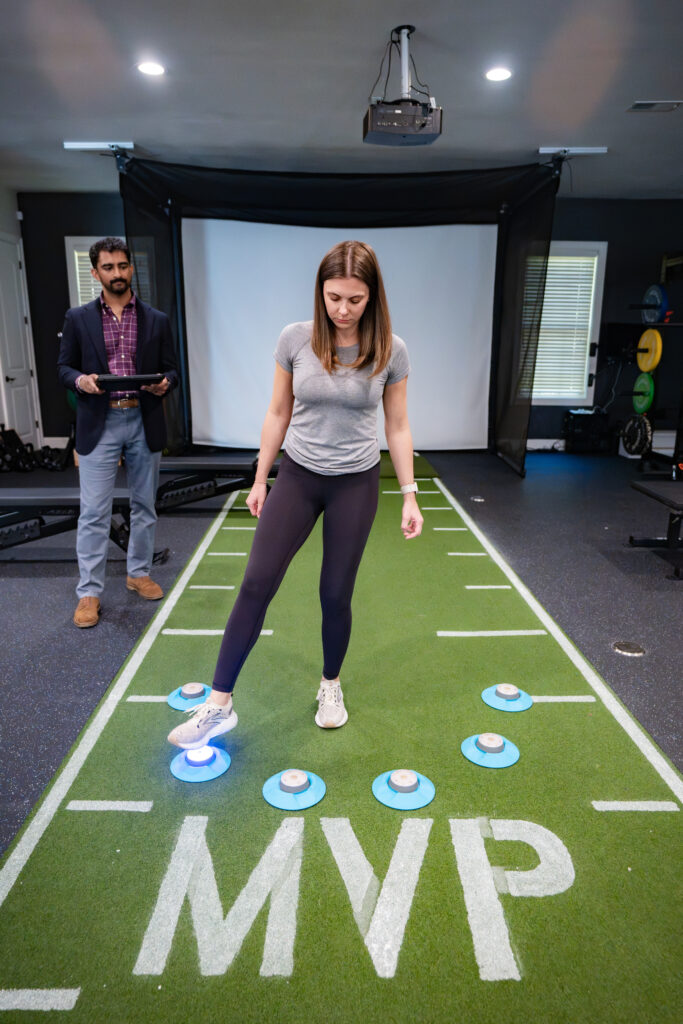
Balance training on the MVP turf
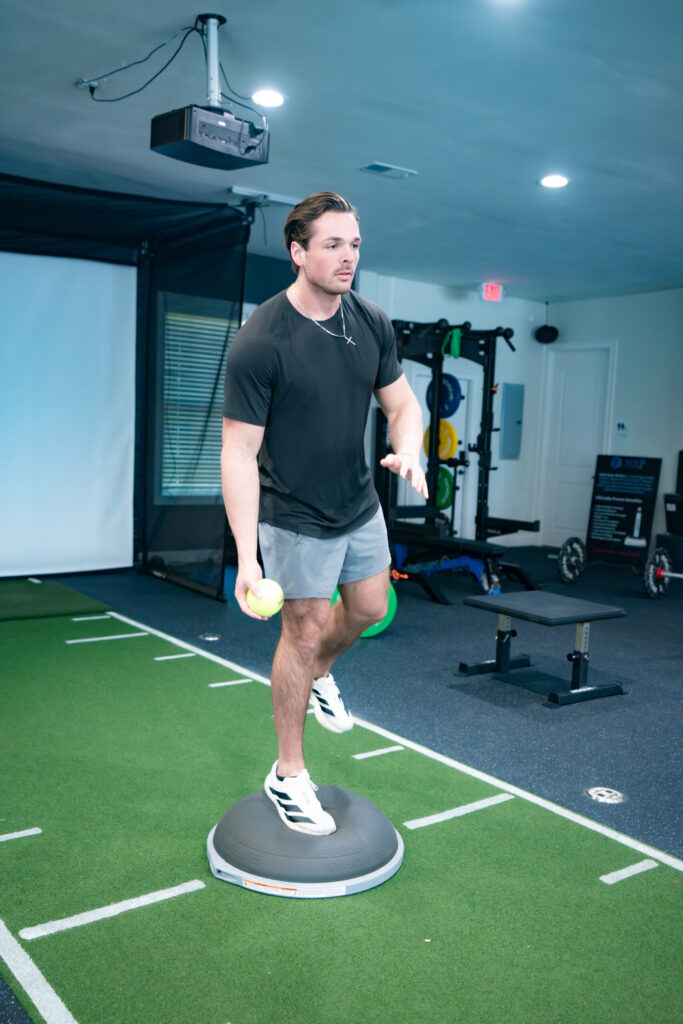
Walking and turning practice on the MVP turfSingle-leg balance with a ball toss on the MVP turfBalance training with a resistance band

Your balance program

  1. Test

    Balance, walking speed, getting up from a chair, reaction time and leg strength on our force plates.

  2. Treat dizziness

    Repositioning maneuvers for BPPV and vestibular exercises when the inner ear is involved.

  3. Train balance

    Progressively harder balance and reaction drills on our turf.

  4. Build strength

    Hip and leg strength to catch yourself and get up with confidence.

  5. Keep it

    A home program and simple home-safety changes.

By the numbers

The evidence

What the research says

A Cochrane review of 108 randomized trials and more than 23,000 older adults found that exercise reduced the rate of falls by 23%. The strongest evidence was for programs built mainly around balance and functional exercise.

Sherrington C, et al. Exercise for preventing falls in older people living in the community. Cochrane Database of Systematic Reviews, 2019.

A Cochrane review of 39 randomized trials found moderate to strong evidence that vestibular rehabilitation is a safe, effective treatment for dizziness from inner-ear problems, with benefits lasting 3 to 12 months.

McDonnell MN, Hillier SL. Vestibular rehabilitation for unilateral peripheral vestibular dysfunction. Cochrane Database of Systematic Reviews, 2015.

About 35% of U.S. adults aged 40 and older had vestibular dysfunction, and those with symptoms had eight times the odds of falling.

Agrawal Y, et al. Disorders of balance and vestibular function in US adults. Archives of Internal Medicine, 2009.

Questions

What patients ask us

Can vertigo be treated in one visit?

Some cases of BPPV improve significantly after one or two treatments; others take longer. Your doctor will tell you what to expect after the exam.

Should I drive to my appointment?

If you are having frequent spinning vertigo, it is safer to have someone drive you.

Do I need a referral?

No. In Georgia you can start with a Doctor of Physical Therapy without a physician’s referral. Call or text (478) 960-7077 to schedule.

Not sure this is the right treatment?

That is what your first visit is for. A Doctor of Physical Therapy examines you one-on-one, explains what they find, and recommends a plan built for you. No referral is needed to start.