
2000 Northside Crossing, Macon · Mon–Fri 8 a.m.–6 p.m. · No referral needed to start
About MVP

Built on one rule.

Every visit is one-on-one with a Doctor of Physical Therapy. It has been that way since our first patient in 2020.

Our story

It started in Alaska.

Dr. Mayur Patel’s first job out of school was in Alaska, under a mentor who practiced physical therapy the way it is supposed to work: one doctor, one patient, for the whole visit.

Back in Georgia, at a corporate orthopedic practice, he saw the other model. Clinicians were double- and triple-booked. Patients got the same exercise sheet as the person before them. Advanced treatments like dry needling were off the table.

So he started building something different, after hours. He saw patients in their homes, people he met on the tennis court and through word of mouth. In 2020 he opened MVP Physio Dr. on the rule he learned in Alaska, and he has not bent it since.

MVP stands for Most Valuable Patient. That patient is you.
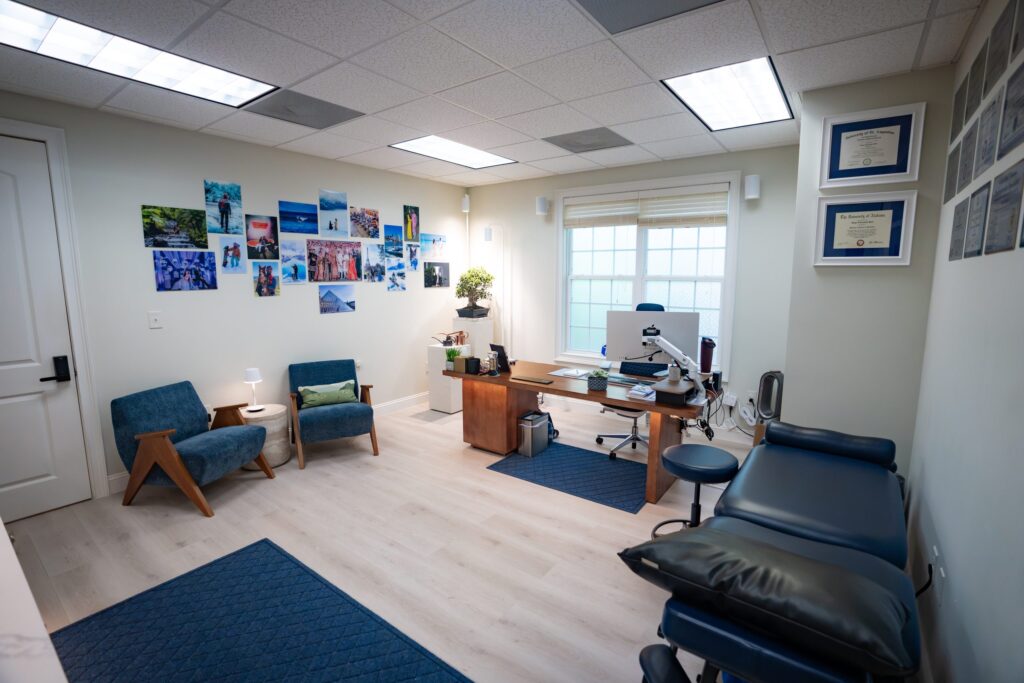
Dr. Patel’s office at MVP Physio Dr.
What doesn’t change

Our promises to every patient.

One-on-one, every visit

Your whole appointment is with a Doctor of Physical Therapy. Never an aide, never an assistant.

The same doctor

The doctor who evaluates you is the doctor who treats you, start to finish.

Never double-booked

It is written into every doctor’s contract. Your hour is yours.

Time to do it right

Every visit is a full hour, one-on-one with your doctor. Not just the first one.

Treatment on day one

You leave your first visit understanding what we found, with a plan and a home program.

Doctor-owned

100% owned and operated by Doctors of Physical Therapy since 2020.

The MVP Method

Six steps. Every doctor. Every visit.

The MVP Method is how every doctor here works, whether you are a high-school quarterback, a weekend golfer or recovering from a knee replacement. The steps don’t change. What we find, and the plan we build from it, is yours alone.

01
We listen.

Your story first: how it started, what it keeps you from, what you want back.

02
We measure.

Strength, motion, force and balance, tested on the same force plates our athletes use, for every patient. We treat the cause, not the symptom.

03
We explain.

You’ll understand what we found and why it matters before anything is treated.

04
We write your program.

A home program built for you, not printed from a template.

05
We plan it together.

How many visits, what progress looks like, and when you’ll be finished.

06
We start today.

Treatment begins in your first visit.

The research

Why we work this way

Every part of The MVP Method, measuring first, starting treatment early, building strength and training balance, is backed by some of the strongest research in rehabilitation.

$2,736lower average health care costs when back pain patients started physical therapy within 14 daysSpine, 2012
23%fewer falls in older adults who did structured balance and functional exercise, across 108 trialsCochrane Review, 2019
68%fewer sports injuries with strength training, across 25 trials and 26,000 athletesBritish Journal of Sports Medicine, 2014
84%lower reinjury risk when athletes met objective strength and hop-test criteria before returningBritish Journal of Sports Medicine, 2016

In 32,070 patients with new low back pain, starting physical therapy within 14 days was linked to lower risk of surgery, injections, imaging and opioid use, and health care costs about $2,736 lower on average.

Fritz JM, et al. Primary care referral of patients with low back pain to physical therapy. Spine, 2012.

A Cochrane review of 108 randomized trials and more than 23,000 older adults found that exercise reduced the rate of falls by 23%, with the strongest evidence for balance and functional training.

Sherrington C, et al. Exercise for preventing falls in older people living in the community. Cochrane Database of Systematic Reviews, 2019.

Across 25 randomized trials and 26,610 athletes, strength training reduced sports injuries to less than a third.

Lauersen JB, et al. The effectiveness of exercise interventions to prevent sports injuries. British Journal of Sports Medicine, 2014.

Athletes who met objective return-to-sport criteria after ACL reconstruction had an 84% lower risk of knee reinjury.

Grindem H, et al. Simple decision rules can reduce reinjury risk by 84% after ACL reconstruction. British Journal of Sports Medicine, 2016.
Recognition
16× Gold
The Telegraph’s Best of Middle Georgia, 2023–2026
5.0 ★
200+ Google reviews
30,000+
One-on-one visits since 2020
300+
Referring physicians

Best Doctor, four years running. Gold in Sports Medicine, Physical Therapy, Orthopedics, Medical Facility and Customer Service.

Become our next Most Valuable Patient.

Call or text to schedule. No referral needed to start, and most insurance is accepted.