

The bridge between your neck and low back
Your mid-back, the thoracic spine, connects to your ribs and anchors the shoulder blades. When it stiffens up, from long hours sitting, a forward-head posture or a strain, the neck, shoulders and low back often pick up the slack and start to hurt too.
Mid-back pain is usually muscular or joint-related and responds well to hands-on treatment, mobility work and strengthening of the upper back. Because heart, lung and other organ problems can also cause pain here, every evaluation starts with a careful screen for warning signs.

By the numbers
Signs your mid-back needs a closer look
- Pain between the shoulder blades that keeps coming back
- Stiffness turning, twisting or taking a deep breath
- Mid-back pain along with neck or shoulder pain
Chest pain, shortness of breath or pain with fever needs a physician right away. For everything else, you do not need a referral to start.
Common conditions we treat
- Muscle strains and spasms between the shoulder blades
- Stiff, painful thoracic joints
- Rib joint pain
- Posture-related upper back pain
- Thoracic disc problems
- Compression fractures from osteoporosis, once cleared by your physician
- Scheuermann’s and other stiffness patterns in younger patients
- Mid-back pain in golfers, swimmers, throwers and lifters
Why we treat the mid-back to help the neck
A review of 14 trials found that thoracic spine manipulation improved neck pain and disability in the short term compared with mobilization or standard care. Freeing up a stiff mid-back often makes the neck and shoulders feel better too.
For golfers, tennis players and throwers, thoracic rotation is also where much of the power in a swing or throw comes from.

How we evaluate your mid-back
Your first visit is a full hour, one-on-one.
Your story and red flags
When it started, what makes it worse, and a screen for warning signs that need a physician.
Thoracic motion
Rotation, extension and side bending, measured.
Rib and joint testing
Hands-on testing of the thoracic and rib joints.
Neck and shoulder screen
Mid-back pain often travels with neck or shoulder problems.
Upper back strength
Shoulder-blade and upper back endurance and strength.
Work, sport and sleep
Desk setup, training and sleep positions.


Your mid-back program
-
Calm it down
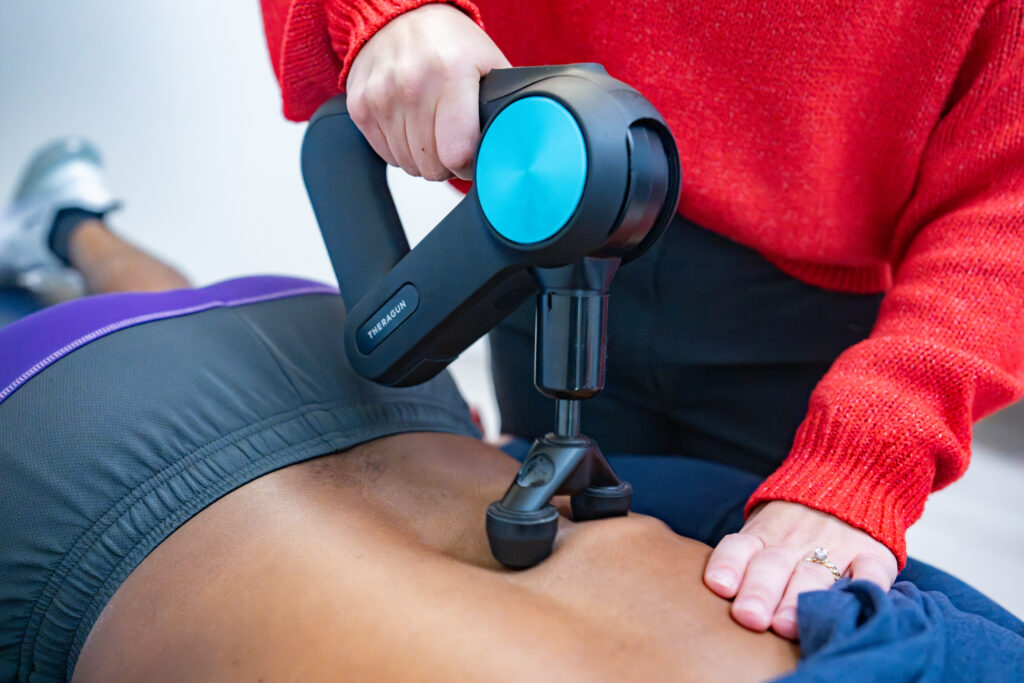
Spinal manipulation, soft-tissue work, cupping or dry needling when appropriate.
-
Restore motion
Rotation and extension drills to free up the thoracic spine.
-
Strengthen
Upper back and shoulder-blade strengthening.
-
Fix the daily triggers
Desk, phone and sleep changes that take load off the area.
-
Return
Swinging, throwing, lifting and work without pain.
Treatments that often help
Pain in the neck as well? See Neck Pain.
What the research says
A systematic review and meta-analysis of 14 randomized trials found that thoracic spine manipulation was more beneficial than thoracic mobilization, cervical mobilization and standard care for neck pain in the short term, and better than standard care for disability.
In a French study of workers across many professions, about 9% of men and 17% of women reported upper back pain. Poor posture at work and weak, deconditioned muscles are among the most common causes.