2000 Northside Crossing, Macon · Mon–Fri 8 a.m.–6 p.m. · No referral needed to start

Treatment at MVP Physio Dr.

Performance Testing

A full baseline of strength, power and side-to-side balance, with a written report and a program built on what it finds.
Force-plate strength testing with a Doctor of Physical Therapy

What it is

How it works

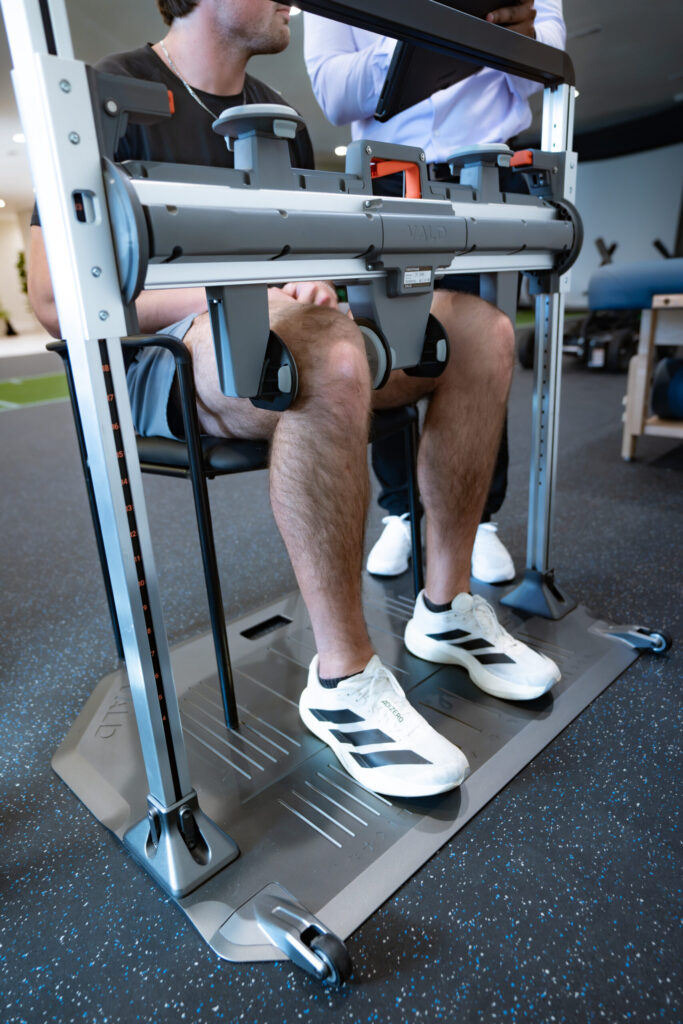
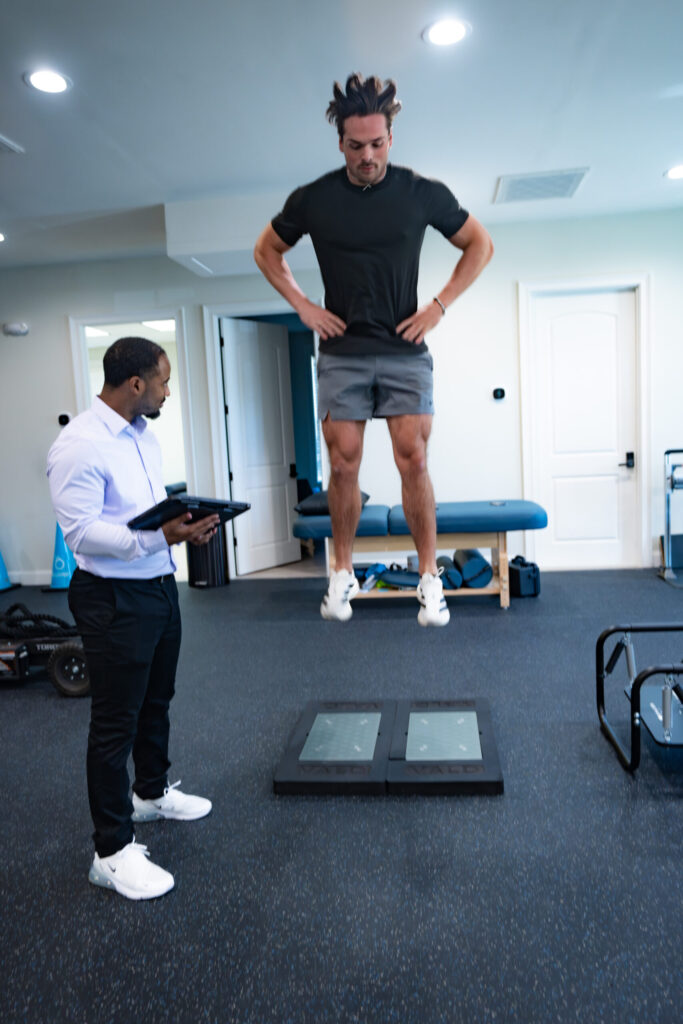
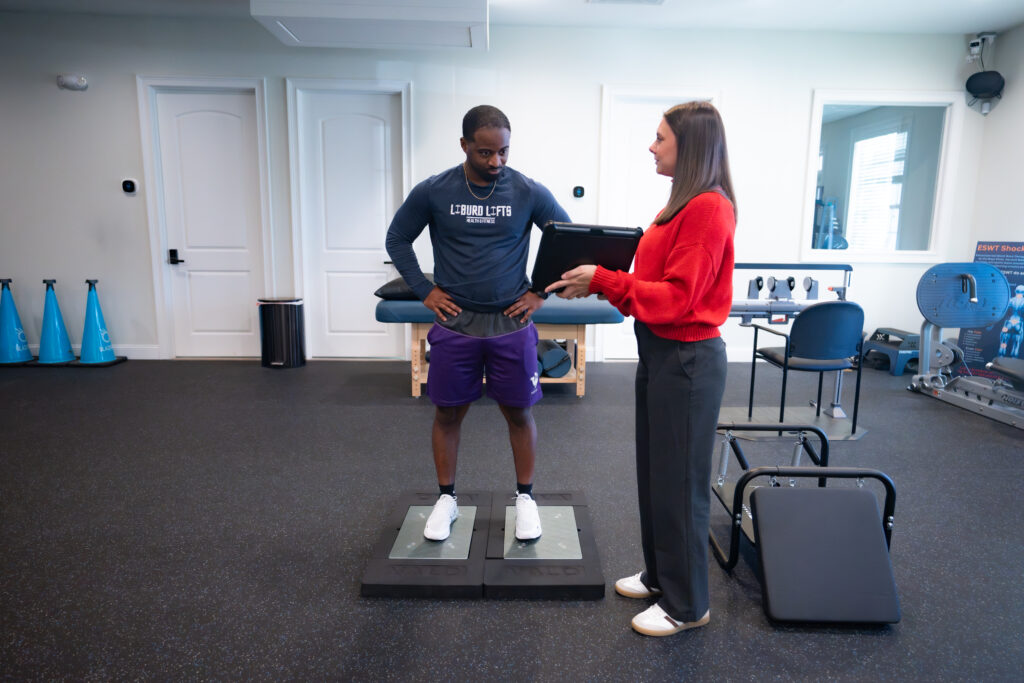
We test every patient on force plates and a strength-testing frame — not only athletes. These tools measure how much force each side produces and how quickly, revealing weaknesses and imbalances you cannot see by eye.

Your results guide your program and give you a baseline to measure progress against.

What it treats

Who it helps

  • Athletes wanting a performance baseline
  • Injury risk screening before a season
  • Tracking strength during rehabilitation
  • Active adults who want objective numbers
  • Older adults tracking strength and balance

What to expect

Your visit

Testing is quick and safe: jumps, pushes and pulls against the plates and frame. Your doctor walks you through the results on screen and builds your training around them.

By the numbers

4.7×higher hamstring injury rate in professional players with an untreated strength imbalanceAmerican Journal of Sports Medicine, 2008
90%minimum strength of the injured leg compared with the healthy one in widely used return-to-sport criteriaBritish Journal of Sports Medicine, 2016
68%fewer sports injuries with strength training across 25 trialsBritish Journal of Sports Medicine, 2014
51%fewer hamstring injuries in programs that include the Nordic hamstring exerciseBritish Journal of Sports Medicine, 2019

You cannot fix what you do not measure

A strength difference of 15% or 20% between legs is almost impossible to see by eye, and most people cannot feel it. On force plates it shows up in seconds.

In a study of professional soccer players, those with an untreated strength imbalance before the season had nearly five times the rate of hamstring injury. When the imbalance was corrected and confirmed by retesting, their risk came back down. Testing tells us what to train, and retesting tells us when it is fixed.
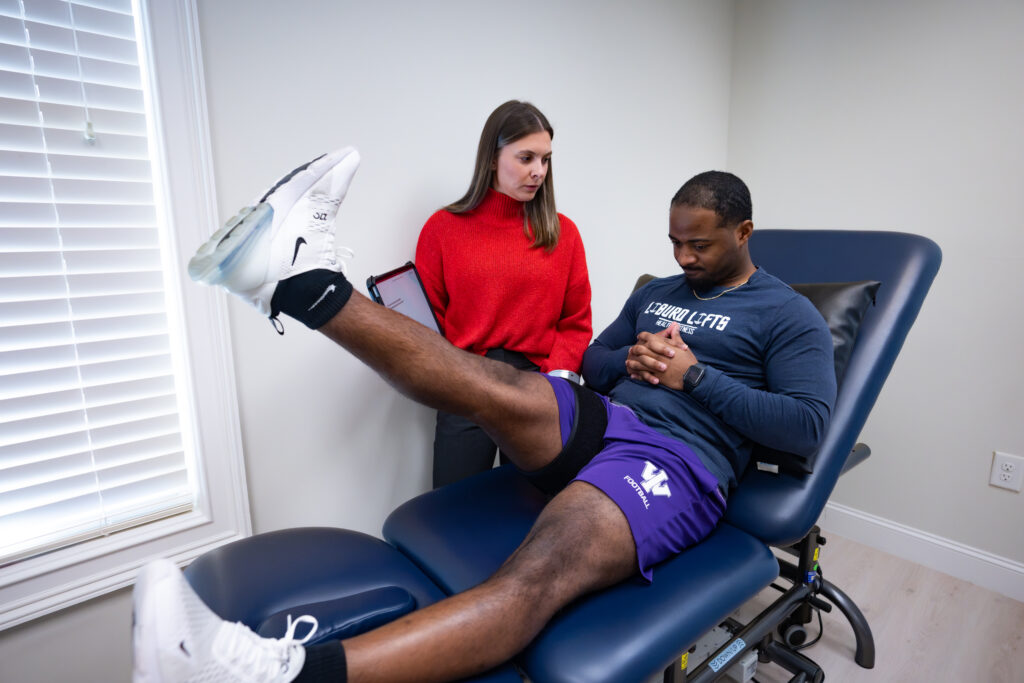
Knee strength testing in the clinic

What your baseline includes

01

Strength

How much force each side produces in the major muscle groups.

02

Power

How quickly you produce force, the quality that matters most for jumping and sprinting.

03

Side-to-side balance

The percentage difference between your left and right sides.

04

Landing

How you absorb force, and whether one leg takes more of the load.

05

Balance

Single-leg steadiness, important for athletes and older adults alike.

06

A written report

Your numbers, what they mean, and what we will train first.
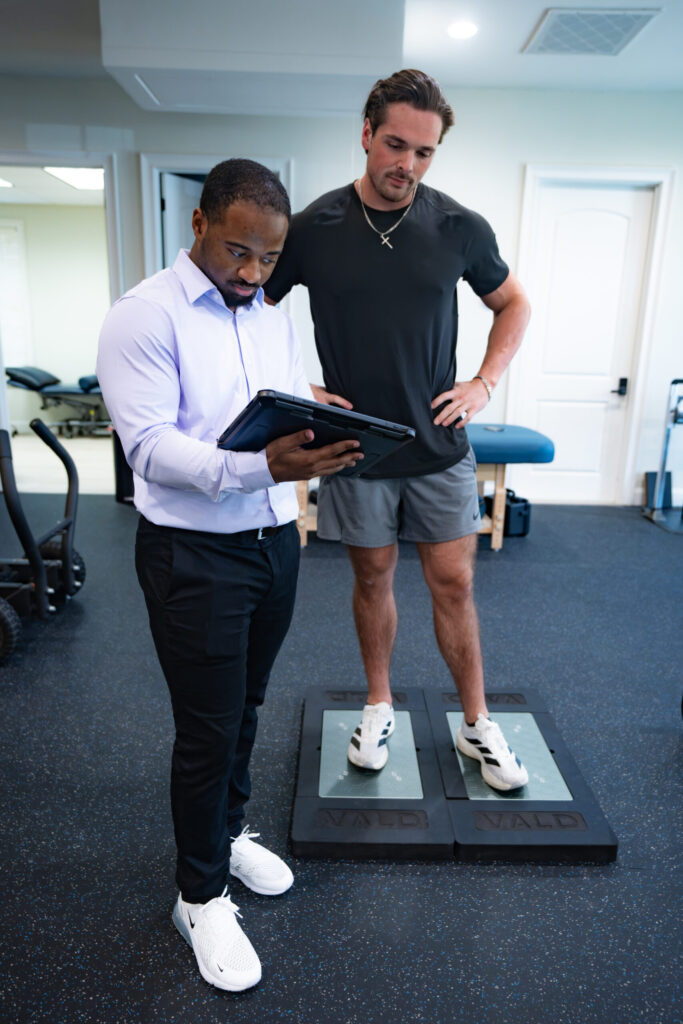
Doctor of Physical Therapy reviewing force-plate results with a patientKnee strength testing on the testing frameJump testing on the force plates

How testing works

  1. Warm up

    A short warm-up so your results reflect your true strength.

  2. Test

    Jumps, pushes and pulls on the force plates and strength frame. Quick and safe.

  3. Review

    Your doctor walks you through the results on screen.

  4. Train

    Your program targets whatever the testing shows is lagging.

  5. Re-test

    We test again to measure progress and decide next steps.

By the numbers

Every patient at MVP Physio Dr. gets baseline strength testing.

The evidence

What the research says

In 462 professional soccer players tested before the season, those with an untreated strength imbalance had about 4.7 times the rate of hamstring injury. When the imbalance was corrected and confirmed by retesting, their risk fell to about that of players without an imbalance.

Croisier JL, et al. Strength imbalances and prevention of hamstring injury in professional soccer players: a prospective study. American Journal of Sports Medicine, 2008.

Athletes who met objective return-to-sport criteria after ACL reconstruction, including quadriceps strength within 10% of the other leg and passing hop tests, had an 84% lower risk of knee reinjury. Each month return was delayed, up to nine months, also lowered risk.

Grindem H, et al. Simple decision rules can reduce reinjury risk by 84% after ACL reconstruction. British Journal of Sports Medicine, 2016.

Across 25 randomized trials and 26,610 athletes, strength training reduced sports injuries to less than a third. Balance training also helped. Stretching alone did not.

Lauersen JB, et al. The effectiveness of exercise interventions to prevent sports injuries. British Journal of Sports Medicine, 2014.

In 8,459 athletes, injury-prevention programs that included the Nordic hamstring exercise cut hamstring injuries by up to 51%.

van Dyk N, et al. Including the Nordic hamstring exercise in injury prevention programmes halves the rate of hamstring injuries. British Journal of Sports Medicine, 2019.

Questions

What patients ask us

Is testing only for athletes?

No. Every patient, including older adults, gets baseline testing.

Do I need a referral?

No. In Georgia you can start with a Doctor of Physical Therapy without a physician’s referral. Call or text (478) 960-7077 to schedule.

Not sure this is the right treatment?

That is what your first visit is for. A Doctor of Physical Therapy examines you one-on-one, explains what they find, and recommends a plan built for you. No referral is needed to start.