
By the numbers
You cannot fix what you do not measure
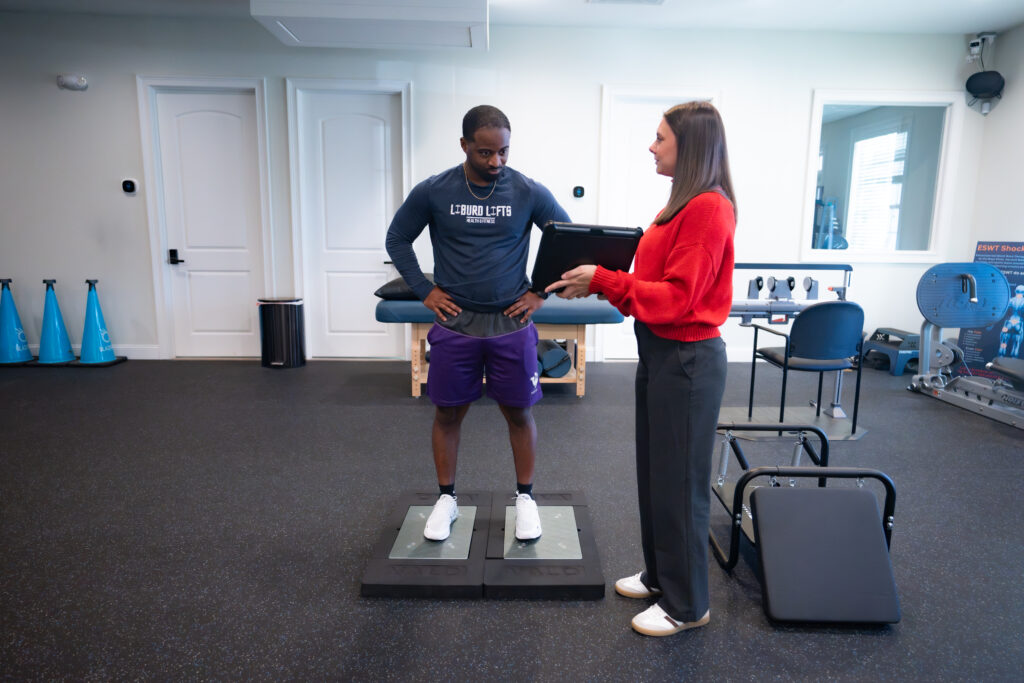
A strength difference of 15% or 20% between legs is almost impossible to see by eye, and most people cannot feel it. On force plates it shows up in seconds.
In a study of professional soccer players, those with an untreated strength imbalance before the season had nearly five times the rate of hamstring injury. When the imbalance was corrected and confirmed by retesting, their risk came back down. Testing tells us what to train, and retesting tells us when it is fixed.
What your baseline includes
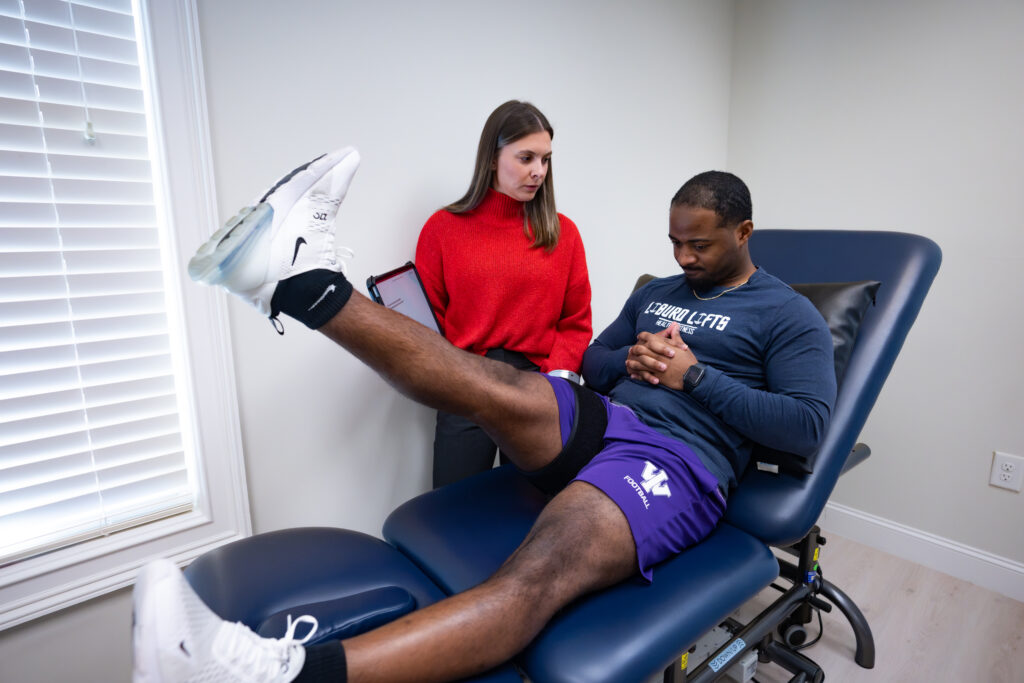
Strength
How much force each side produces in the major muscle groups.
Power
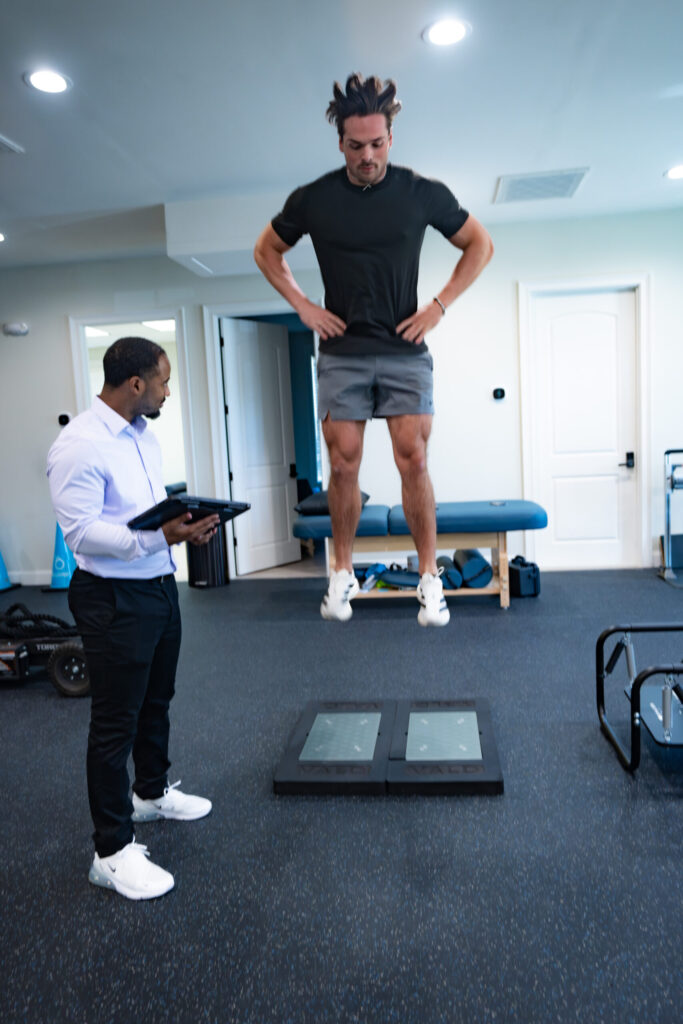
How quickly you produce force, the quality that matters most for jumping and sprinting.
Side-to-side balance
The percentage difference between your left and right sides.
Landing
How you absorb force, and whether one leg takes more of the load.
Balance
Single-leg steadiness, important for athletes and older adults alike.
A written report
Your numbers, what they mean, and what we will train first.

How testing works
-
Warm up
A short warm-up so your results reflect your true strength.
-
Test
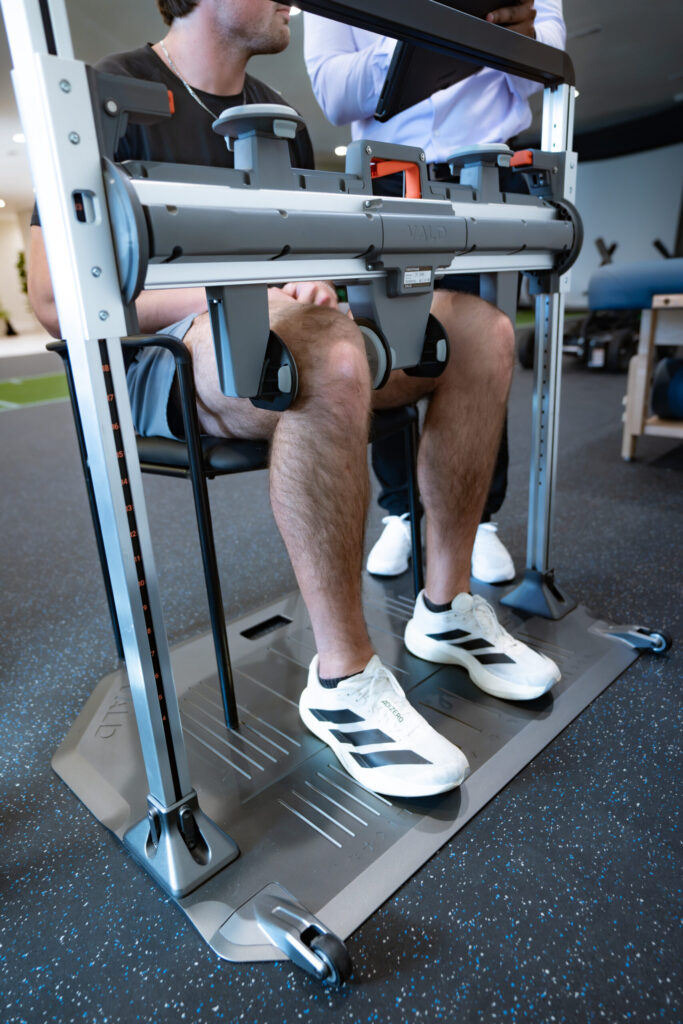
Jumps, pushes and pulls on the force plates and strength frame. Quick and safe.
-
Review
Your doctor walks you through the results on screen.
-
Train
Your program targets whatever the testing shows is lagging.
-
Re-test
We test again to measure progress and decide next steps.