2000 Northside Crossing, Macon · Mon–Fri 8 a.m.–6 p.m. · No referral needed to start

Treatment at MVP Physio Dr.

Strength & Conditioning

Progressive, supervised strength training that carries you from rehabilitation into lasting strength and performance.
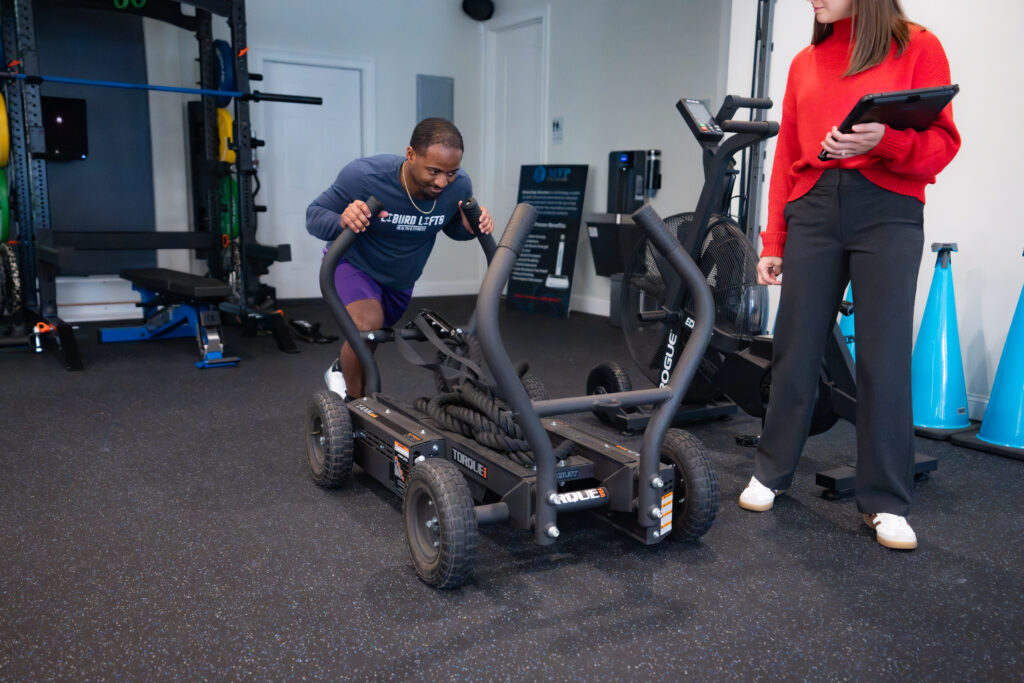
Patient pushing a weighted sled while a Doctor of Physical Therapy coaches at MVP Physio Dr.

What it is

How it works

Pain relief is the start, not the finish. Strength and conditioning at MVP bridges the gap between rehabilitation and full activity, with programming based on your testing and your goals.

What it treats

Who it helps

  • Finishing rehabilitation after injury or surgery
  • Athletes preparing for a season
  • Active adults building strength safely
  • Older adults maintaining strength and independence

What to expect

Your visit

Your doctor builds a program from your test results and coaches you through it, then progresses it as you get stronger. You will leave with a plan you can continue on your own.

By the numbers

68%fewer sports injuries with strength training across 25 trialsBritish Journal of Sports Medicine, 2014
24.2%of U.S. adults meet the guidelines for both aerobic and muscle-strengthening activityCDC, 2020
51%fewer hamstring injuries in programs that include the Nordic hamstring exerciseBritish Journal of Sports Medicine, 2019

Strength is the best injury prevention we have

Across 25 trials and more than 26,000 athletes, strength training cut sports injuries to less than a third. Stretching alone did not reduce injuries at all. Yet most adults never strength train: only about one in four meets the federal guidelines, and among adults 65 and older it is closer to one in eight.

Our strength and conditioning work is built by Doctors of Physical Therapy, around your injury history, your sport or job, and your testing numbers, so you get stronger without flaring up old problems.

Sled push for strength and power
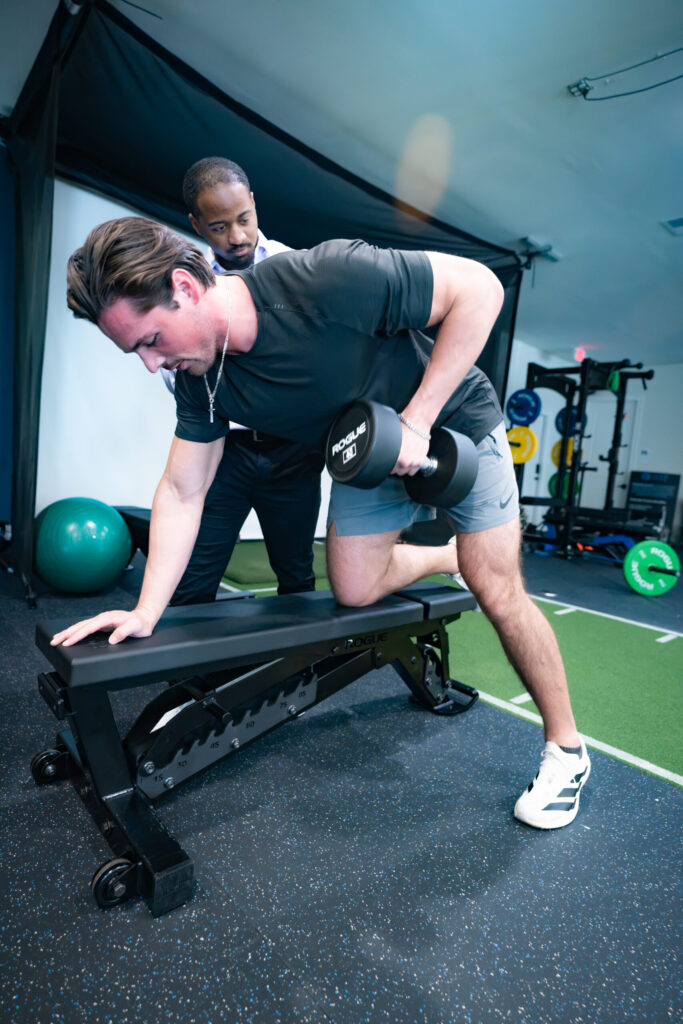
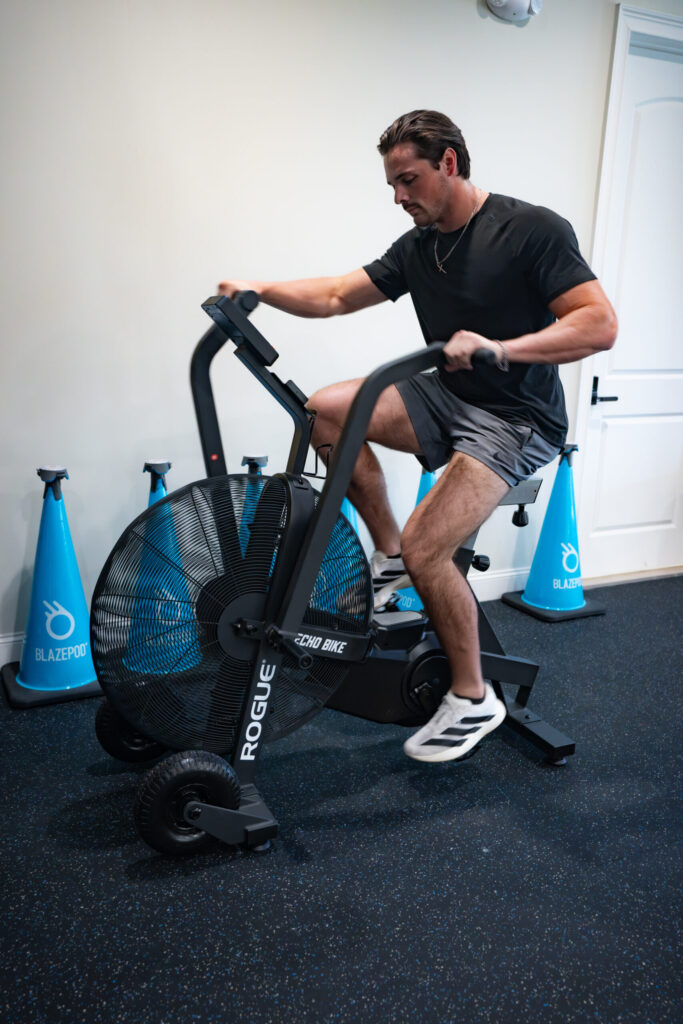
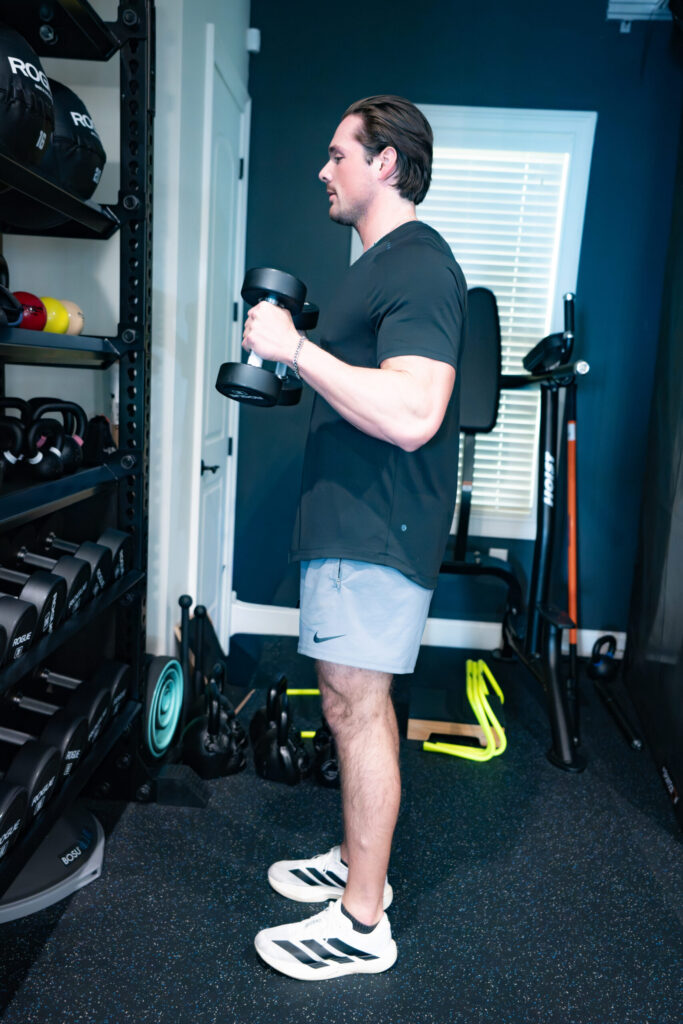
Dumbbell curl during a strength sessionSingle-arm dumbbell row coached by a Doctor of Physical TherapyConditioning on the air bike

How it works

  1. Test

    A strength and power baseline on our force plates.

  2. Plan

    A program built around your goals, your injury history and your numbers.

  3. Coach

    Technique and progression, one-on-one.

  4. Re-test

    Measure progress and adjust.

  5. Keep going

    A program you can carry on in your own gym.

By the numbers

The evidence

What the research says

Across 25 randomized trials and 26,610 athletes, strength training reduced sports injuries to less than a third. Balance training also helped. Stretching alone did not.

Lauersen JB, et al. The effectiveness of exercise interventions to prevent sports injuries. British Journal of Sports Medicine, 2014.

In 8,459 athletes, injury-prevention programs that included the Nordic hamstring exercise cut hamstring injuries by up to 51%.

van Dyk N, et al. Including the Nordic hamstring exercise in injury prevention programmes halves the rate of hamstring injuries. British Journal of Sports Medicine, 2019.

In 2020, only 24.2% of U.S. adults met the federal guidelines for both aerobic and muscle-strengthening activity, and among adults 65 and older the figure was 15.3% of men and 10.8% of women.

Centers for Disease Control and Prevention, National Center for Health Statistics. Physical activity among adults aged 18 and over: United States, 2020.

Questions

What patients ask us

Do I need a referral?

No. In Georgia you can start with a Doctor of Physical Therapy without a physician’s referral. Call or text (478) 960-7077 to schedule.

Not sure this is the right treatment?

That is what your first visit is for. A Doctor of Physical Therapy examines you one-on-one, explains what they find, and recommends a plan built for you. No referral is needed to start.