Most shoulder pain gets better without surgery
Mayo Clinic says physical therapy is usually one of the first treatments suggested for a rotator cuff injury, and that conservative care is sometimes all that is needed to recover. Cleveland Clinic reports that about 8 out of 10 people with partial rotator cuff tears get better with nonsurgical treatment.
Your shoulder is the most mobile joint in the body, and it relies on small muscles around the shoulder blade and rotator cuff to stay controlled. When those muscles are weak, tired or poorly coordinated, the joint gets irritated. Restoring that control is the core of how we treat shoulders.
By the numbers
Signs your shoulder needs a closer look
- Pain reaching overhead, behind your back or sleeping on that side
- Weakness lifting your arm
- Pain that has lasted more than a couple of weeks
You do not need a referral or an MRI to start. If anything in your exam suggests you need imaging or a surgeon first, we will tell you.
Common conditions we treat
- Rotator cuff tendinopathy and tears
- Shoulder impingement
- Frozen shoulder (adhesive capsulitis)
- Shoulder instability and dislocations
- Labral tears
- Shoulder arthritis
- Throwing and overhead athlete shoulder pain
- Rehabilitation after rotator cuff repair, labral repair or shoulder replacement
An MRI finding is not the whole story
In a 2026 study of 602 adults, almost every shoulder showed some rotator cuff change on MRI, including shoulders that did not hurt at all. A tear on a scan does not always explain your pain, and it does not automatically mean you need surgery.
That is why we start with how your shoulder moves, what it can and cannot do, and which tests reproduce your pain, then match treatment to what we find.
How we evaluate your shoulder
Your first visit is a full hour, one-on-one.
Your story and goals
How it started, what it stops you doing and what you want back, from sleeping comfortably to serving or throwing.
Neck screen
Shoulder pain is sometimes coming from the neck. We check first.
Motion and shoulder-blade control
How your arm and shoulder blade move together, measured on both sides.
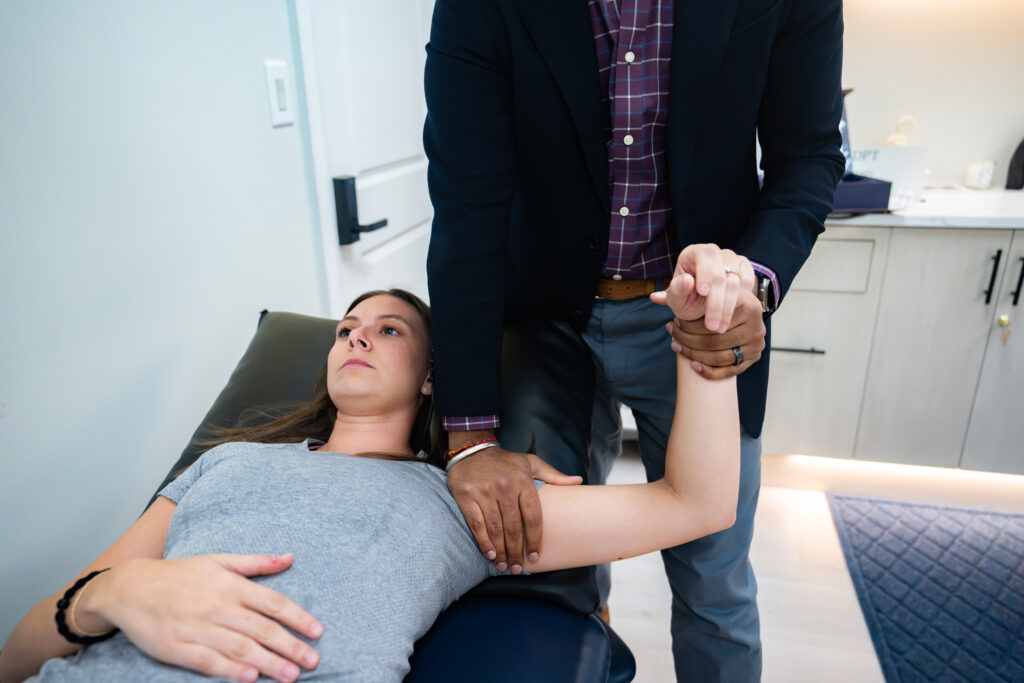
Rotator cuff and labrum tests
Hands-on tests that point to which structure is involved.
Strength testing
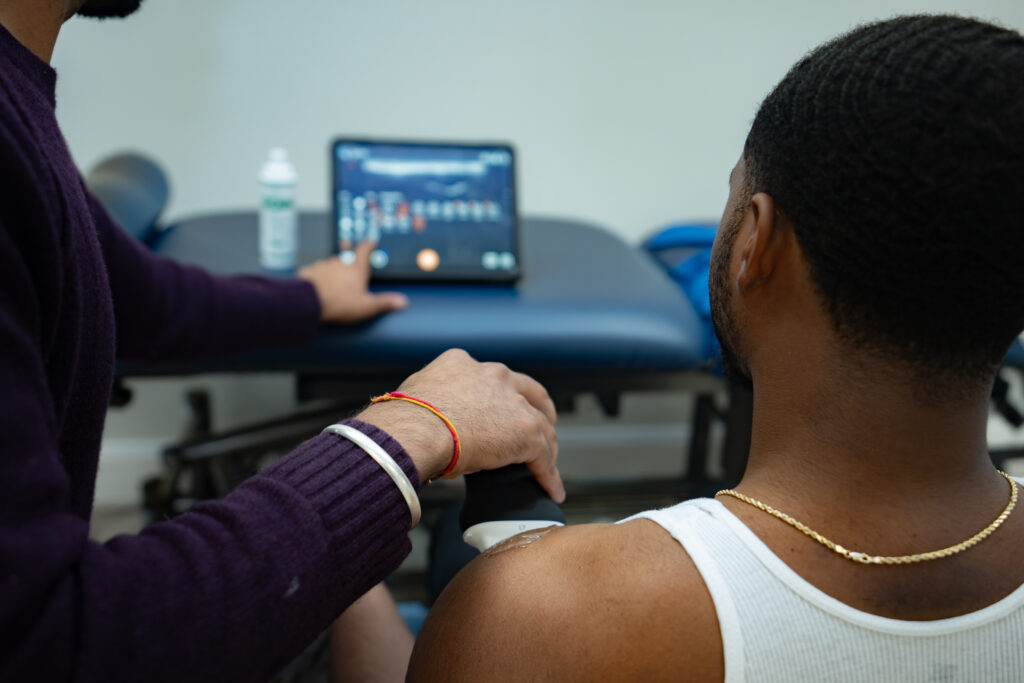
Objective strength numbers for the rotator cuff and shoulder blade muscles, side to side.
Sport and work demands
Throwing, swinging, lifting or overhead work, so your plan fits what you do.
Your shoulder program
-
Calm it down
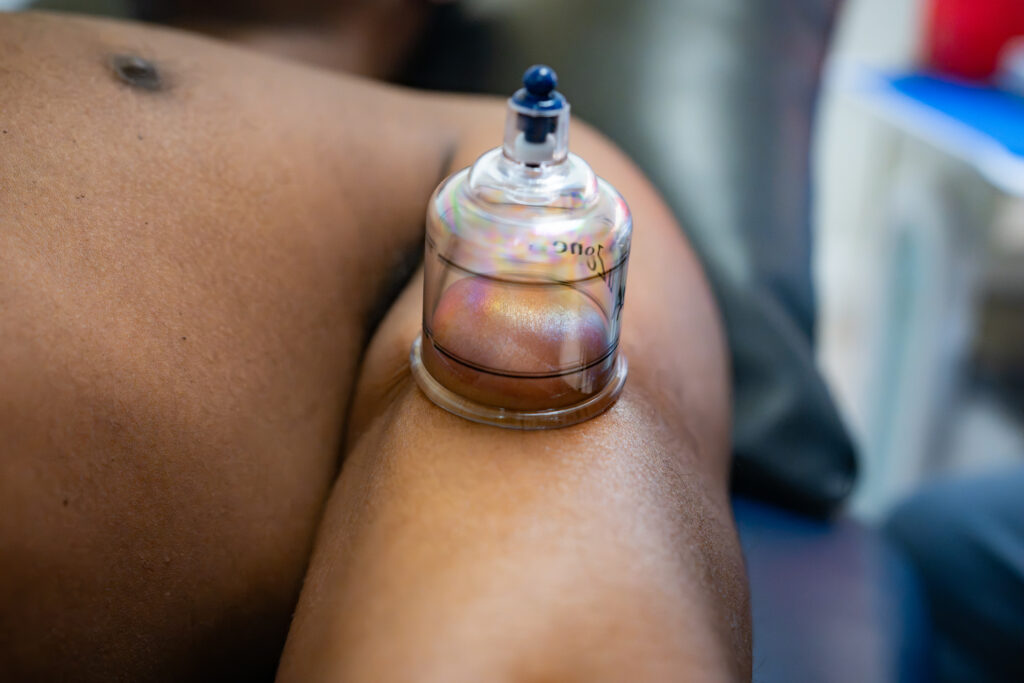
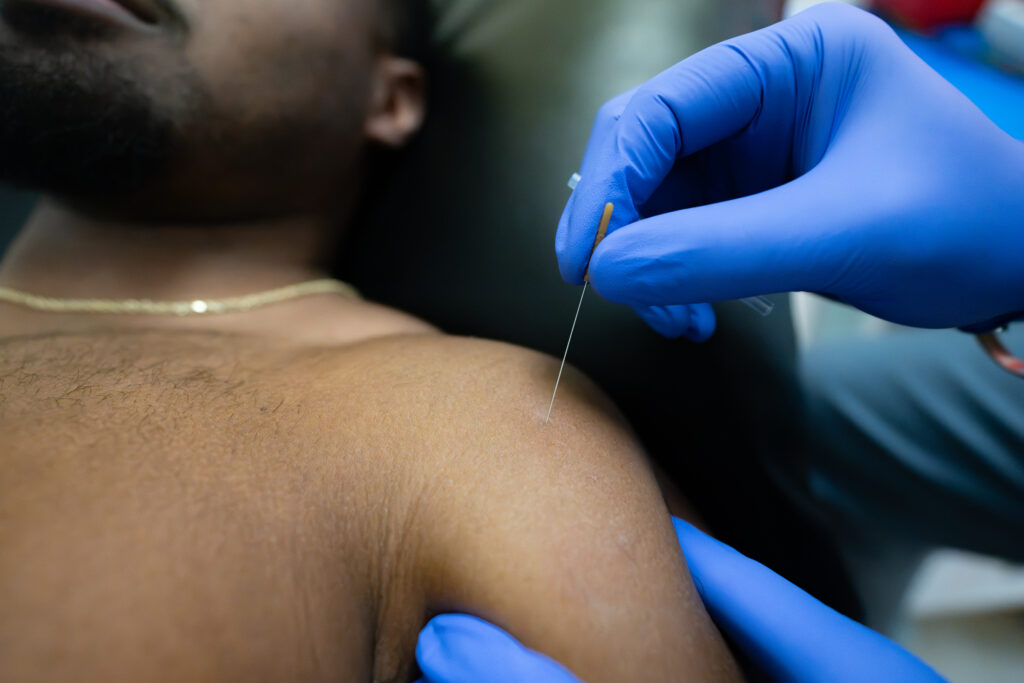
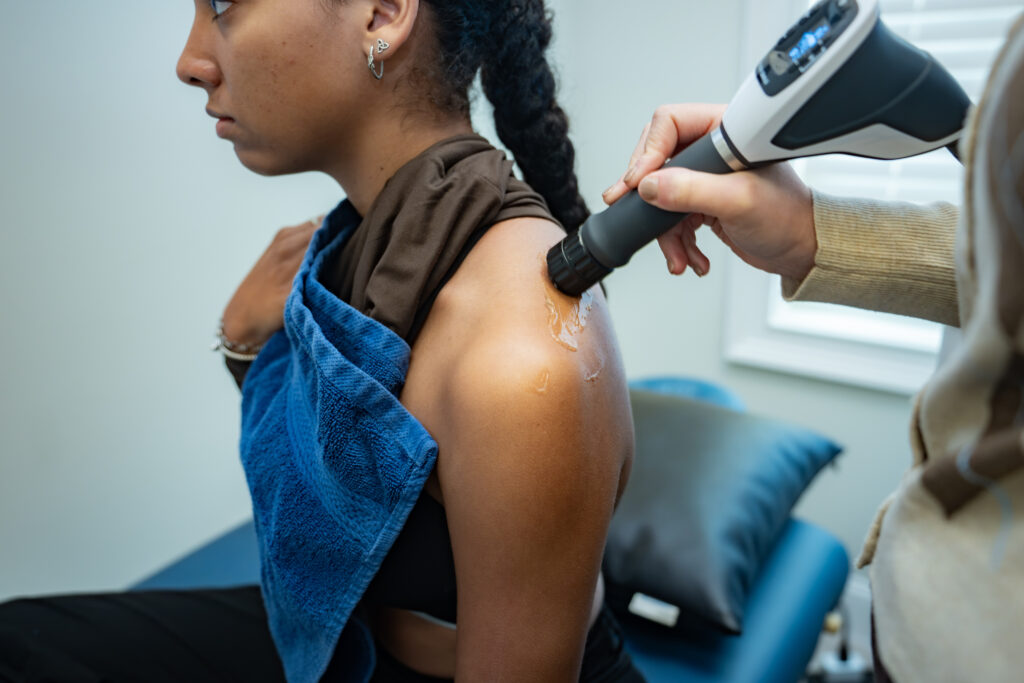
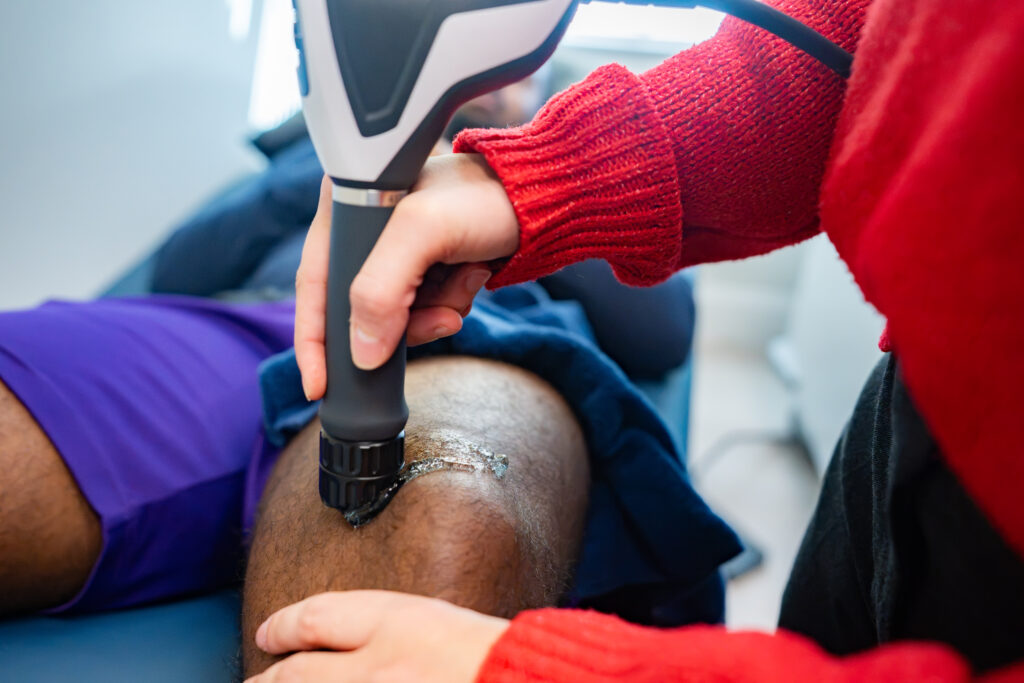
Hands-on treatment, dry needling or shockwave when appropriate, and positions that ease pain while you sleep and work.
-
Restore motion
Get the shoulder and shoulder blade moving freely again.
-
Strengthen
Progressive rotator cuff and shoulder-blade strengthening, measured as you go.
-
Load overhead
Reaching, lifting, pressing and pulling under real loads.
-
Return
Throwing, swinging and sport-specific work for athletes, or full work and daily tasks.
Why start with physical therapy
In a Finnish trial of 180 shoulders with non-traumatic rotator cuff tears, people treated with physical therapy alone did as well at one year as those who also had surgery.
When surgery is the right call, such as many traumatic tears in active people, we prepare you beforehand and guide your recovery afterward, in step with your surgeon.
Treatments that often help
Throwing or overhead athlete? See MVP Athlete.
What the research says
In a randomized trial of 180 shoulders with non-traumatic supraspinatus tears, physical therapy alone, physical therapy plus acromioplasty, and physical therapy plus rotator cuff repair produced no clinically meaningful difference in outcomes at one year.
Among 602 adults aged 41 to 76, 98.7% had at least one rotator cuff abnormality on MRI. Abnormalities were found in 96% of shoulders without symptoms, and most full-thickness tears were in shoulders that did not hurt.
JAMA Internal Medicine, 2026 (reported by The Medical Republic).
What leading medical centers say
Mayo Clinic says physical therapy is usually one of the first treatments suggested for a rotator cuff injury, that targeted exercises can restore flexibility and strength, and that therapy is an important part of recovery after surgery.
Cleveland Clinic reports that about 8 out of 10 people with partial rotator cuff tears get better with nonsurgical treatment, including physical therapy focused on strengthening and stretching, though improvement can take up to a year.