Strong legs protect knees
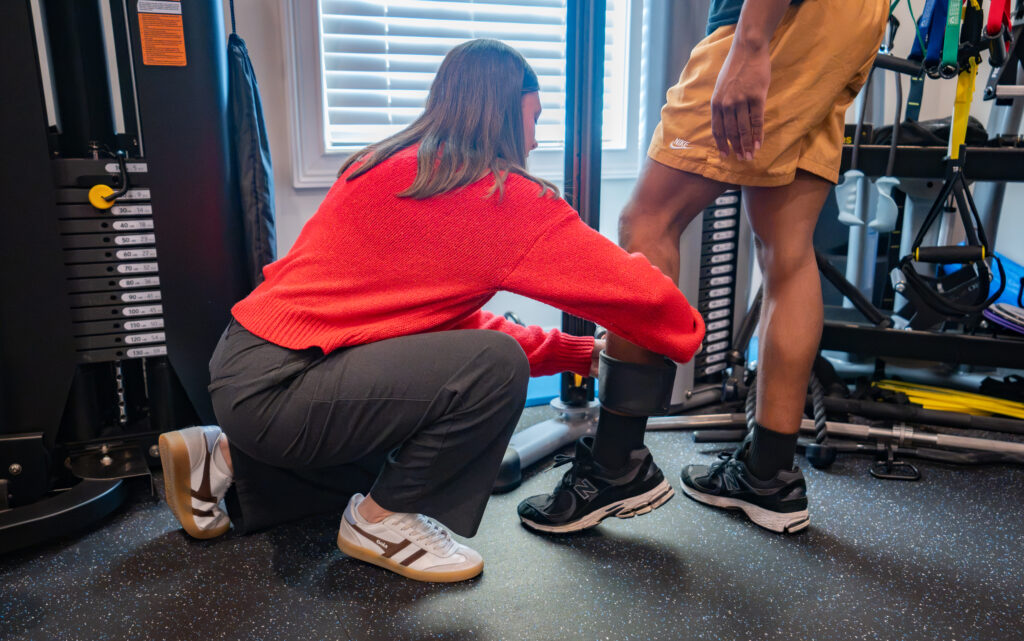
Your knee is a hinge that depends on the muscles around it. When the quadriceps, hamstrings and hips are strong and coordinated, the joint is steadier and better protected. When they are weak, from injury, surgery, arthritis or time off, the knee takes more of the load and hurts.
That is why nearly every knee plan at MVP Physio Dr. is built on strength, measured objectively and progressed carefully, whether you are recovering from an ACL reconstruction or trying to stay active with arthritis.
By the numbers
Common conditions we treat
- ACL, MCL and other ligament injuries
- Meniscus tears
- Kneecap pain (patellofemoral pain)
- Patellar tendon pain (jumper’s knee)
- Knee osteoarthritis
- IT band pain
- Osgood-Schlatter disease in young athletes
- Rehabilitation after ACL reconstruction, meniscus repair or knee replacement
Surgery is not always the first answer
For many knee problems, a well-run rehabilitation program is the right first step. In a landmark trial of adults with a meniscus tear and knee arthritis, patients who started with physical therapy improved about as much at six months as those who had arthroscopic surgery.
When surgery is the right call, such as many ACL tears, we prepare you beforehand and guide your recovery afterward, in step with your surgeon.
How we evaluate your knee
Your first visit is a full hour, one-on-one.
Your story and goals
How it happened, what it stops you doing and what you want to get back to.
Ligaments, meniscus and kneecap
Hands-on tests to find which structure is involved.
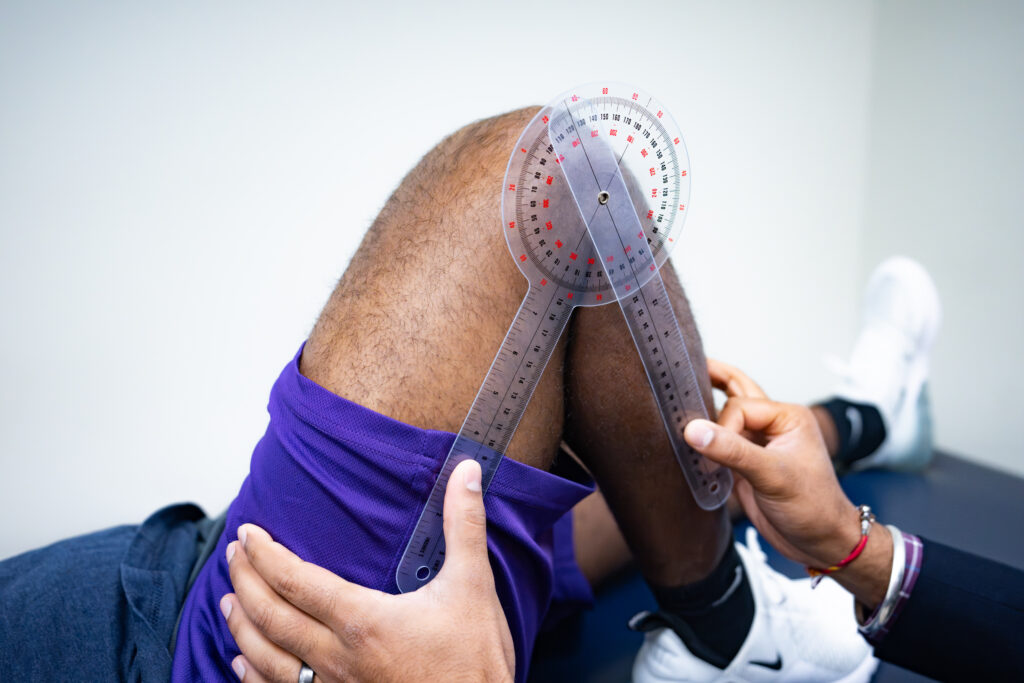
Motion and swelling
Measured, not estimated, so we can track every gain.
Force-plate and strength testing
Side-to-side strength and power numbers for the quadriceps, hamstrings and hips.
Movement quality
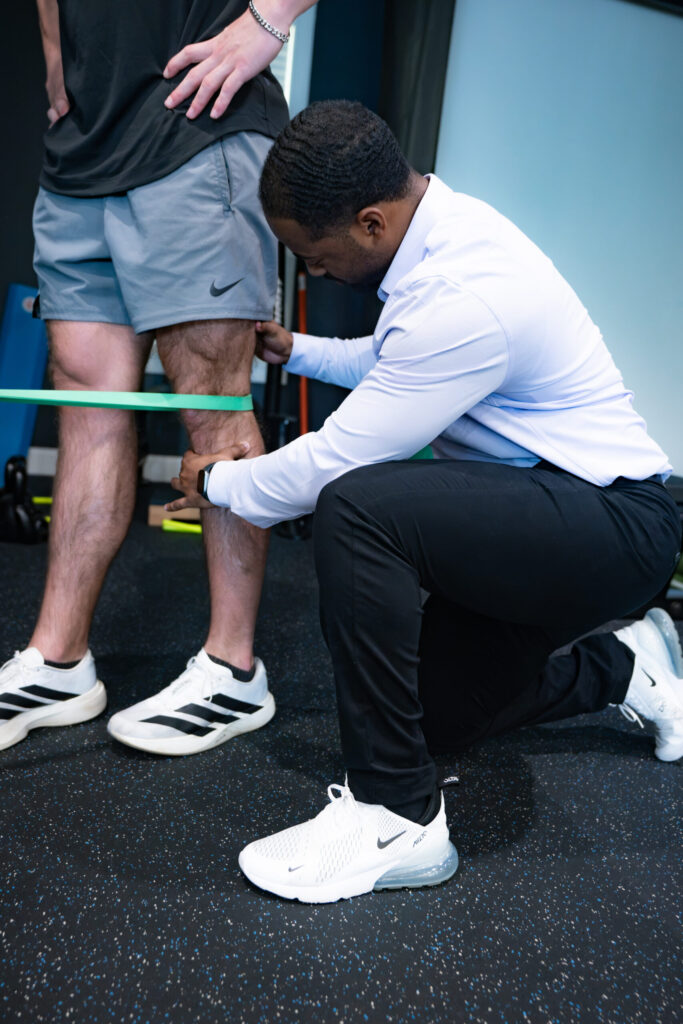
How you squat, step down, land and change direction.
Return-to-sport testing
For athletes, hop tests and strength targets decide when you are ready, not the calendar.
Your knee program
-
Protect and calm
Control swelling and pain, restore motion, and follow your surgeon’s protocol after surgery.
-
Rebuild strength early
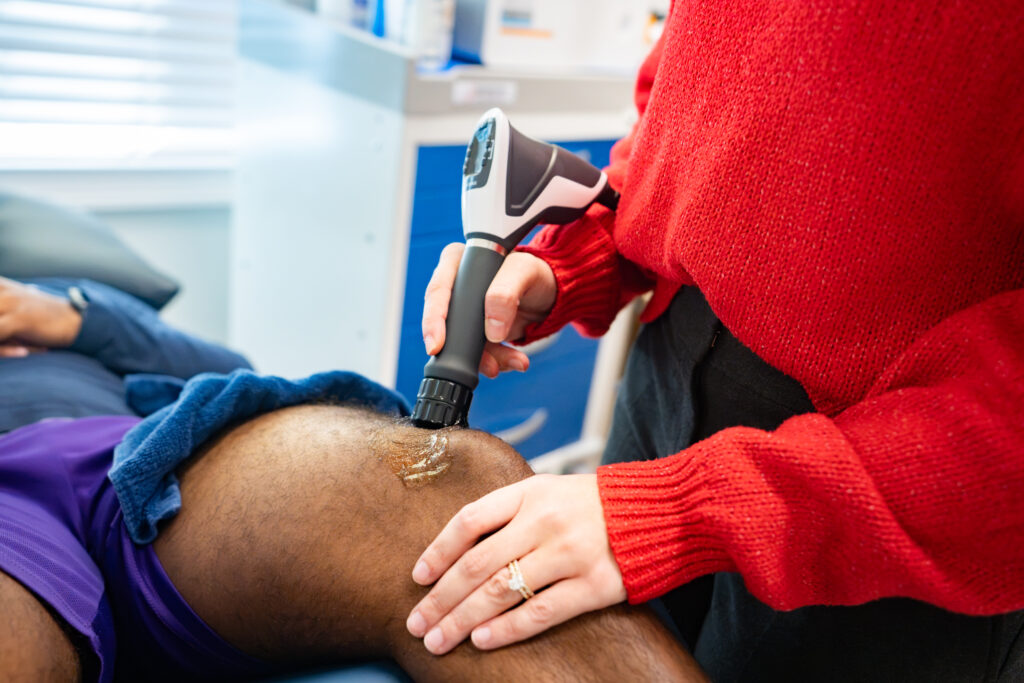
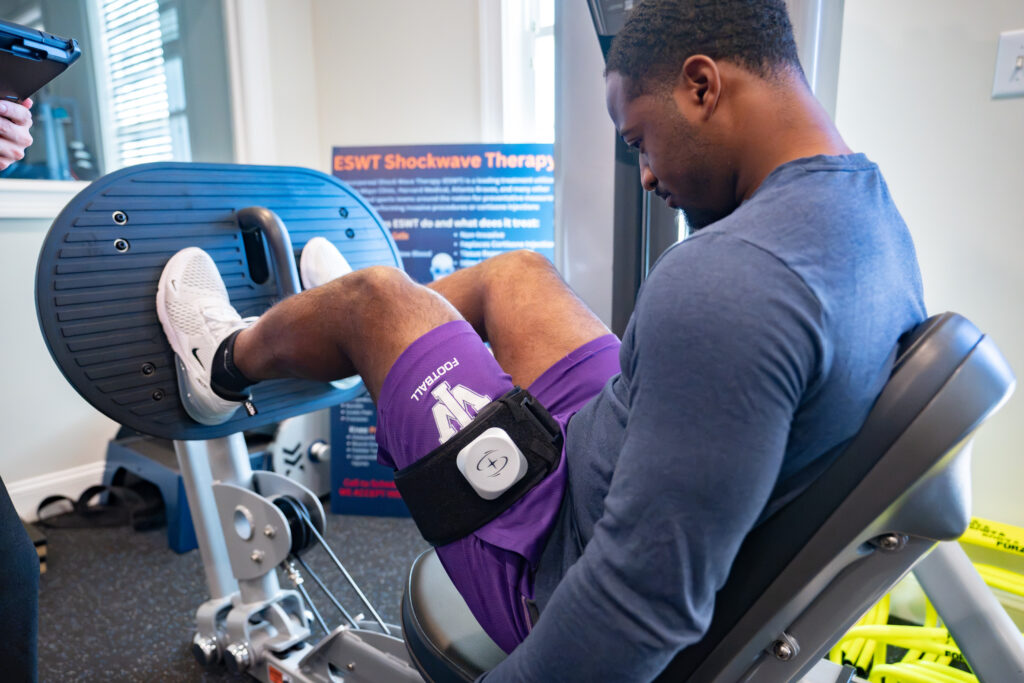
Blood flow restriction training lets us build quadriceps strength with light loads while tissue heals.
-
Load progressively
Squats, step-downs and single-leg strength, measured on our force plates as you progress.
-
Move like an athlete
Landing, cutting and running, or stairs, kneeling and walking, depending on your goals.
-
Prove you are ready
Objective strength and hop testing before return to sport or full activity.
Treatments that often help
Athlete? See MVP Athlete.
What the research says
A Cochrane review of 44 trials found high-quality evidence that land-based exercise reduces knee osteoarthritis pain and moderate-quality evidence that it improves physical function, with benefits lasting at least two to six months after treatment ended.
In athletes returning to sport after ACL reconstruction, meeting objective criteria, including quadriceps strength within 10% of the other leg and passing hop tests, reduced the risk of knee reinjury by 84%. Each month return was delayed, up to nine months, also lowered reinjury risk.
In 351 adults with a meniscus tear and mild-to-moderate knee arthritis, those who started with physical therapy had functional improvement similar to those who had arthroscopic partial meniscectomy at six months. About 30% of the physical therapy group went on to have surgery.
What leading medical centers say
Mayo Clinic notes that strengthening the muscles around the knee makes it more stable, that athletes may need exercises that correct the movement patterns affecting their knees, and that flexibility and balance work also matter.