
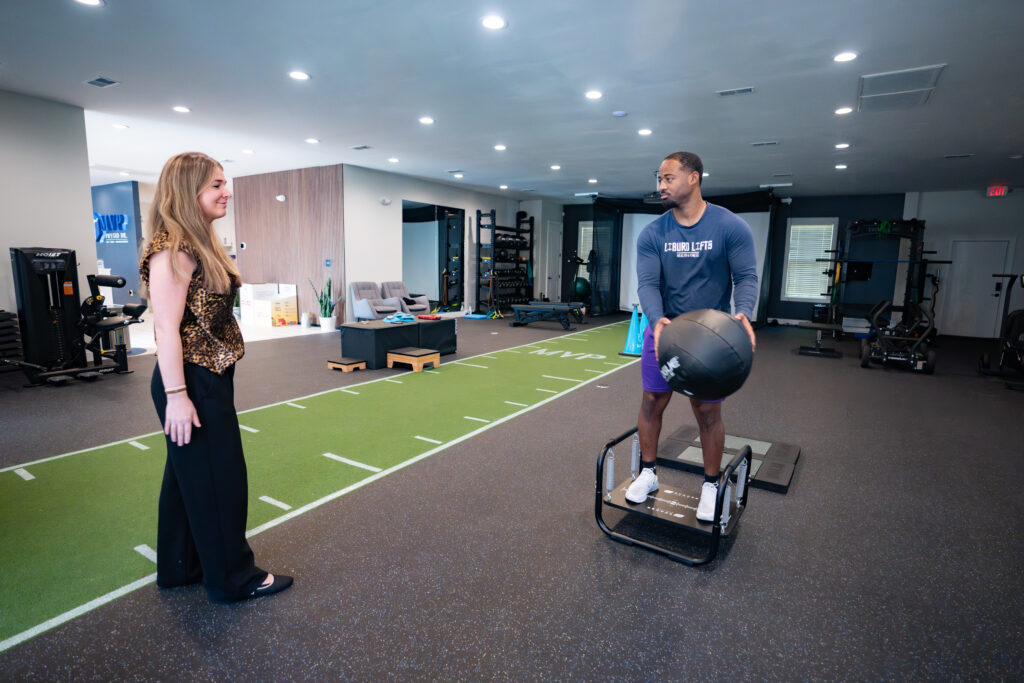
Exercise is medicine for Parkinson’s
Parkinson’s gradually shrinks movement: steps get shorter, turns get harder, posture stoops and balance becomes less reliable. Exercise is one of the most powerful tools to push back.
The largest review to date, 156 randomized trials, found that nearly every form of structured exercise improved movement and quality of life. In the Parkinson’s Foundation’s outcomes study of nearly 3,000 people, those who exercised at least 2.5 hours a week had a slower decline in quality of life.
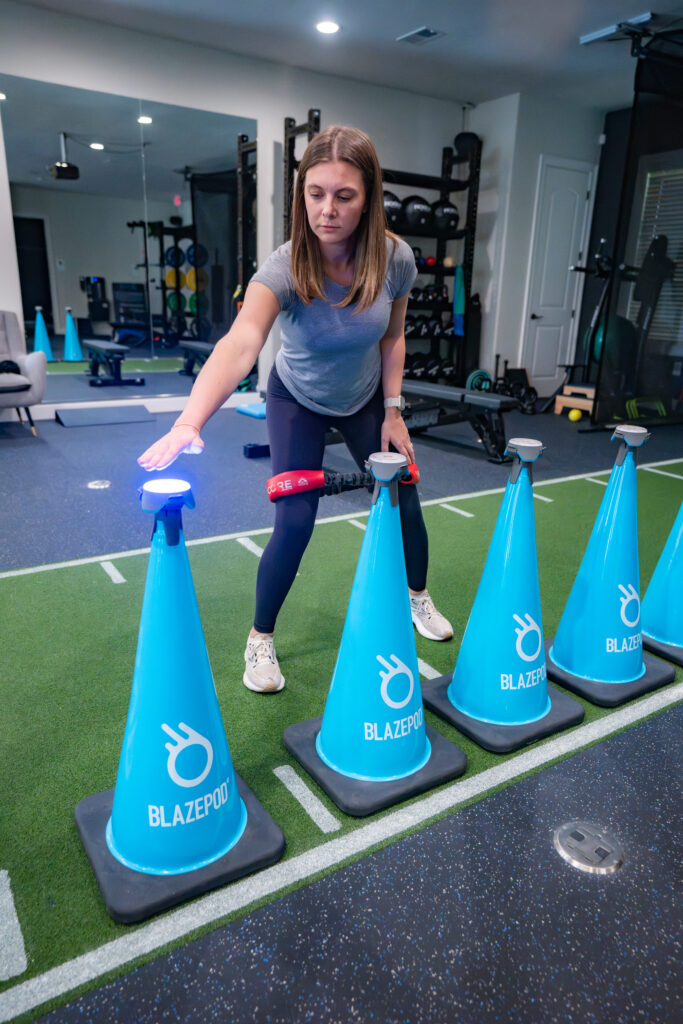
By the numbers
Signs it is time to start therapy
- Shorter, shuffling steps or freezing when you start walking or turn
- A fall or near-fall, or feeling less steady
- Harder to get up from a chair, turn in bed or get in and out of the car
You do not need to wait until things get hard. Starting early helps build a reserve of strength and balance.
Common conditions we treat
- Parkinson’s disease at any stage
- Shuffling or shortened steps
- Freezing when starting to walk or turning
- Balance problems and falls
- Stiffness and slowness of movement
- Trouble getting up from a chair, turning in bed or getting in and out of a car
- Stooped posture
Bigger, stronger, steadier
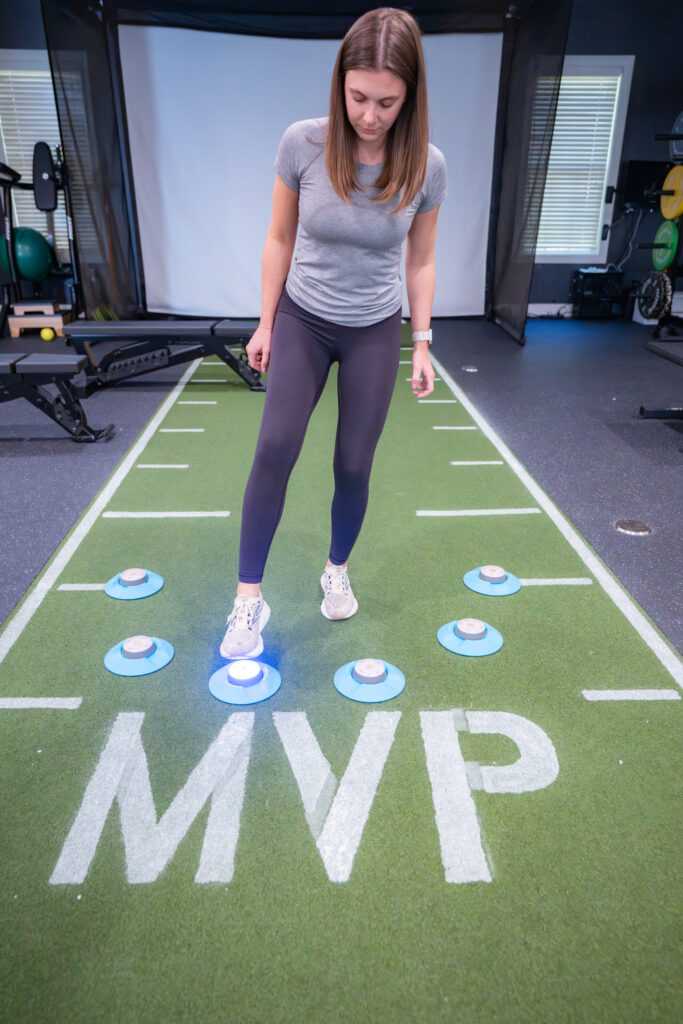
Our program focuses on large-amplitude movement to counter shrinking steps, balance and fall-prevention training, strength work for the legs and trunk, and aerobic conditioning, all progressed as you improve.
Dr. Maddie Brannen’s clinical focus includes neurological rehabilitation and Parkinson’s disease, and every one of our doctors is trained in balance rehabilitation. We are glad to coordinate with your neurologist.
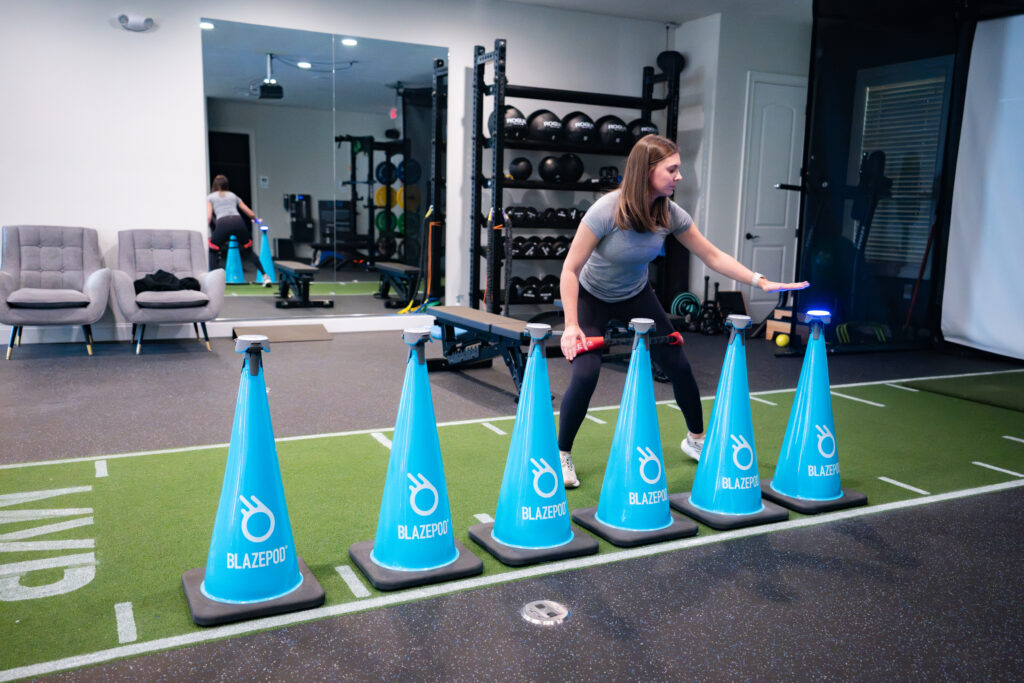
How we evaluate
Your first visit is a full hour, one-on-one.
Walking
Speed, step length and how you turn.
Freezing
What triggers it and which strategies help you get moving.
Balance
Standing, reaching, stepping and recovering.
Getting up and down
Chair, floor, bed and car transfers.
Strength
Leg and trunk strength, measured on our force plates.
Your goals
What has become harder, and what you want to keep doing.

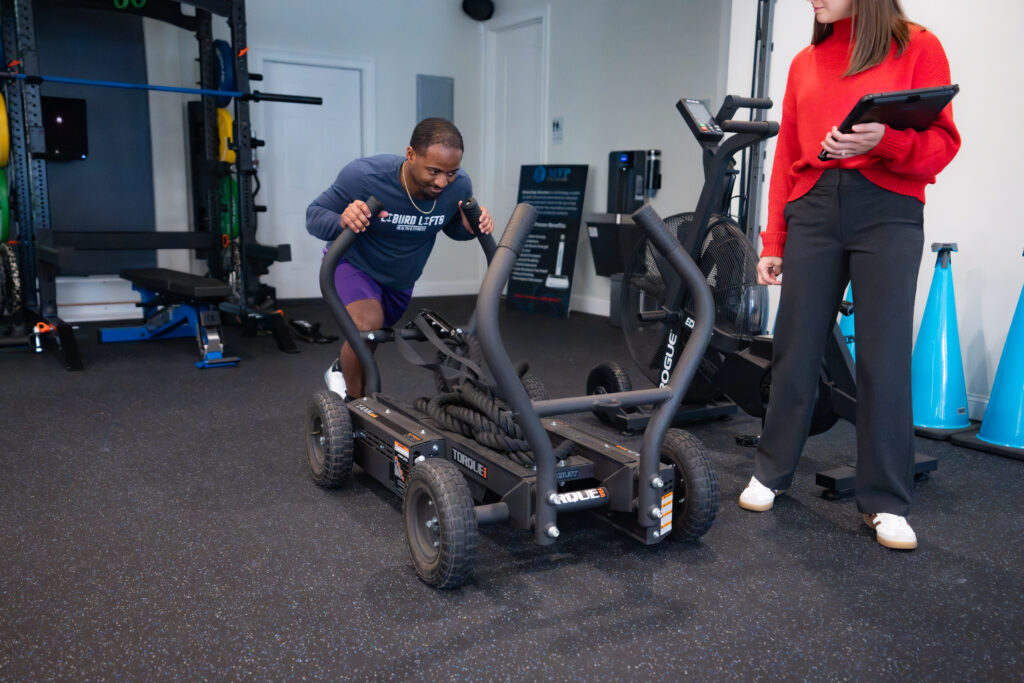
Your Parkinson’s program
-
Measure
A baseline of walking, balance and strength.
-
Move big
Large-amplitude movement training for steps, arms and posture.
-
Balance
Progressive balance and fall-prevention work.
-
Strengthen
Legs, hips and trunk, plus aerobic conditioning.
-
Keep going
A home program, and regular re-checks to stay ahead of changes.
Treatments that often help
Worried about falls? See Balance & Falls.
What the research says
The largest review to date, 156 randomized trials and nearly 8,000 people with Parkinson’s, found that most forms of exercise improved motor symptoms and quality of life compared with no exercise. Differences between exercise types were small, suggesting that doing structured exercise consistently matters most.
In nearly 3,000 people with Parkinson’s followed over time, those who began exercising more than 2.5 hours a week had a slower decline in quality of life.
A systematic review found that about 60% of people with Parkinson’s in prospective studies fell at least once, and about 39% fell repeatedly.
A 2022 study found nearly 90,000 new Parkinson’s diagnoses in the U.S. each year, about 50% more than earlier estimates.
What leading medical centers say
Mayo Clinic recommends physical therapy focused on balance and stretching as part of Parkinson’s care, along with regular aerobic exercise, noting that exercise can improve strength, walking, flexibility and balance.