2000 Northside Crossing, Macon · Mon–Fri 8 a.m.–6 p.m. · No referral needed to start

Treatment at MVP Physio Dr.

Pregnancy & Postpartum Rehab

Care before, during and after pregnancy: relief for back, pelvic and hip pain, strength that fits each trimester, and a step-by-step return to exercise after delivery.

What it is

How it works

Pregnancy changes how your spine, pelvis and hips carry load, and delivery is a physical event your body has to recover from. Pregnancy and postpartum rehab is orthopedic physical therapy adapted to each stage: treating the pain you have now, keeping you strong and active, and rebuilding afterward.

Dr. Gabrielle Mills and Dr. Madison Brannen see pregnant and postpartum patients, and Dr. Mayur V. Patel has worked extensively with patients before, during and after pregnancy. You can ask for a female Doctor of Physical Therapy when you schedule.

Our care is external and orthopedic. We do not perform internal pelvic floor exams. If you need pelvic floor therapy, we will refer you to a pelvic health specialist and can work alongside them.

What it treats

Who it helps

  • Low back pain during and after pregnancy
  • Pelvic girdle and sacroiliac (SI) joint pain
  • Pubic bone and groin pain
  • Hip pain and sciatica
  • Abdominal separation (diastasis recti) and core weakness
  • Recovery after a C-section or vaginal delivery
  • Return to running, lifting and sport after delivery
  • Building strength before pregnancy

What to expect

Your visit

Your first visit is a full hour, one-on-one. We ask about your pregnancy or delivery, screen for anything your OB-GYN or midwife should see first, and test how your back, pelvis and hips move and handle load, in positions that are comfortable for your stage.

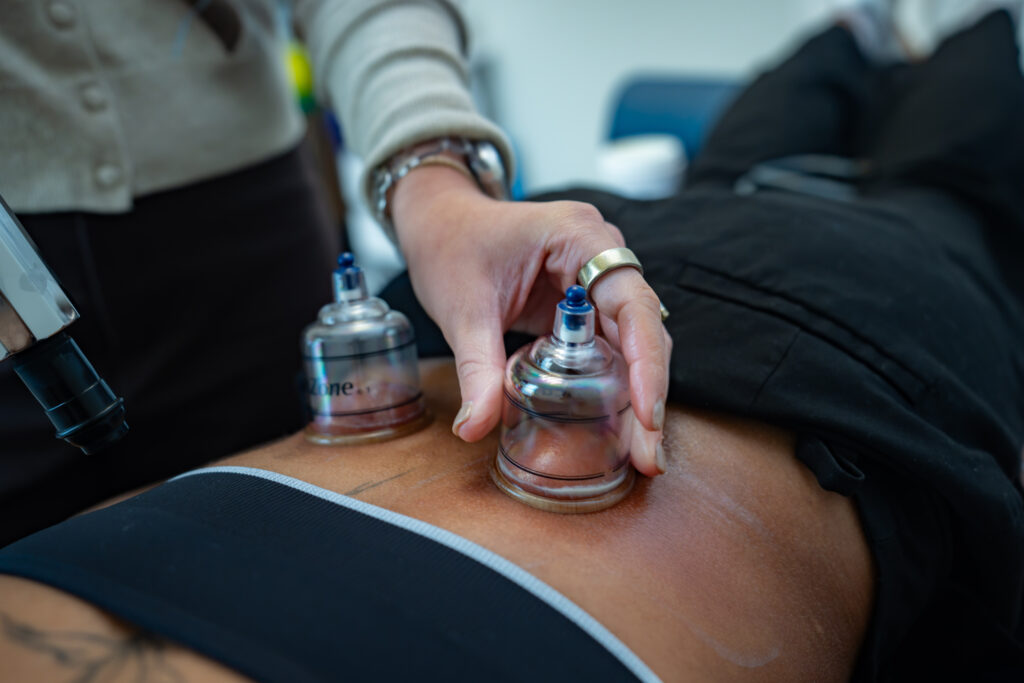
During pregnancy, treatment is built around exercise and hands-on manual therapy. Dry needling and myofascial cupping are available when they are appropriate for you and your stage of pregnancy, and we talk through that decision with you first. After delivery, our full range of treatments is available as you heal.

We coordinate with your OB-GYN or midwife. Stop exercising and call them if you have vaginal bleeding, leaking fluid, regular painful contractions, chest pain, shortness of breath before exertion, dizziness, a headache that will not go away, or pain or swelling in one calf.

By the numbers

2 in 3More than two in three pregnant women experience low back painCochrane Review, 2015
34%fewer women reported back and pelvic pain after an 8- to 12-week exercise programCochrane Review, 2015
150minutes of moderate activity a week are recommended during a healthy pregnancyCDC
60%of first-time mothers had abdominal separation six weeks after deliveryBritish Journal of Sports Medicine, 2016

Common does not mean you have to live with it

Back, pelvic and hip pain are so common in pregnancy that many women are told it is simply part of the deal. It does not have to be. In a Cochrane review of 34 trials, an 8- to 12-week exercise program reduced the number of women reporting back and pelvic pain, and reduced pain-related sick leave.

The same is true after delivery. Abdominal separation, a weak core and a sore back are common in the first year, and a structured return to strength is what gets you back to lifting, running and carrying your baby without pain.
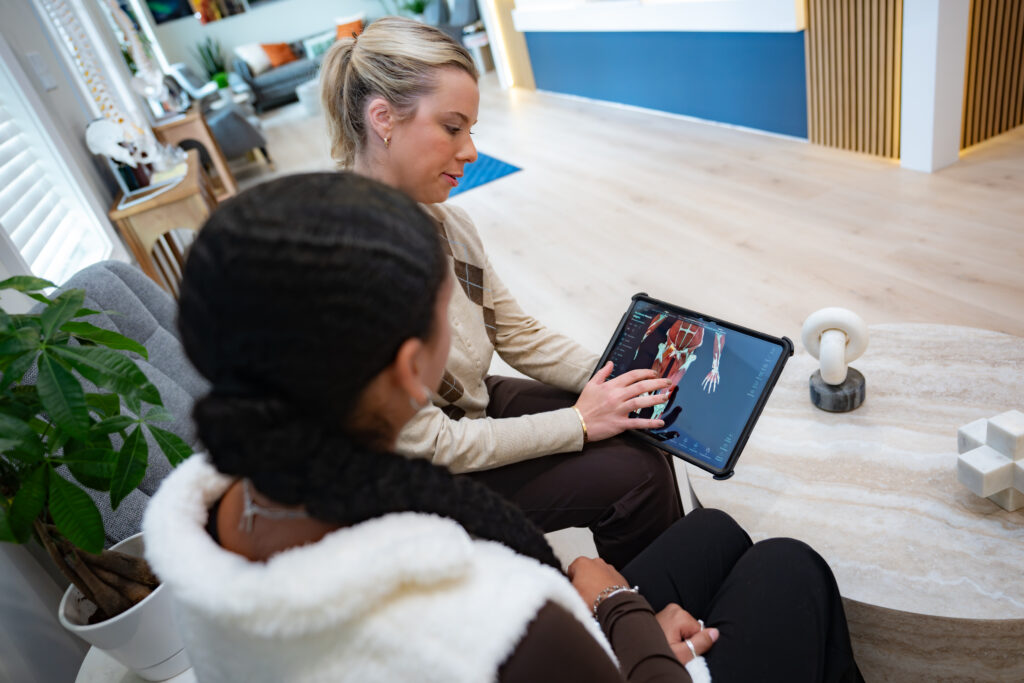
Doctor of Physical Therapy explaining findings to a patient on a tablet

Before, during and after pregnancy

Care changes with each stage. Every visit is a full hour, one-on-one.

01

Before pregnancy

Treat existing back, hip or pelvic pain now, and build the hip, core and back strength that will carry the load of pregnancy.

02

First trimester

Conservative hands-on care and an exercise plan you can keep up as your body starts to change.

03

Second trimester

Often when back and pelvic pain begin. Stabilizing exercise, hands-on treatment and changes to how you move, sit and sleep.

04

Third trimester

Positions that keep you off your back, comfort and sleep strategies, a support belt when it helps, and a plan for recovery after delivery.

05

The first 12 weeks after delivery

Gentle at first, then rebuilding core, hip and leg strength with low-impact work, following your OB-GYN or midwife’s guidance.

06

Back to running, lifting and sport

Strength and force-plate testing show when you are ready, so the return is based on measurements, not guesswork.

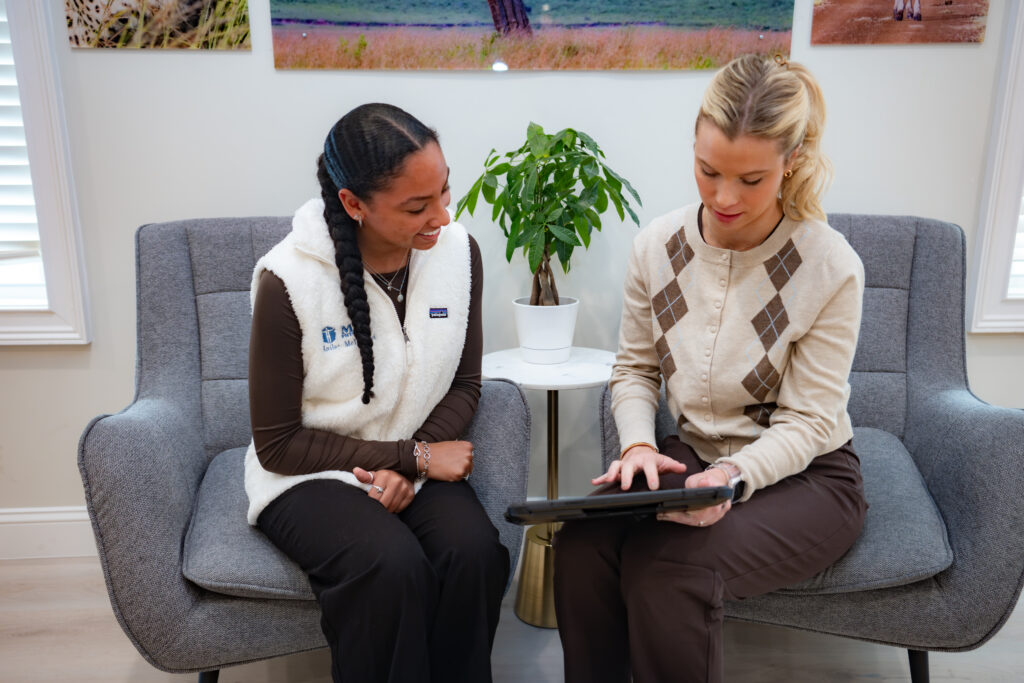
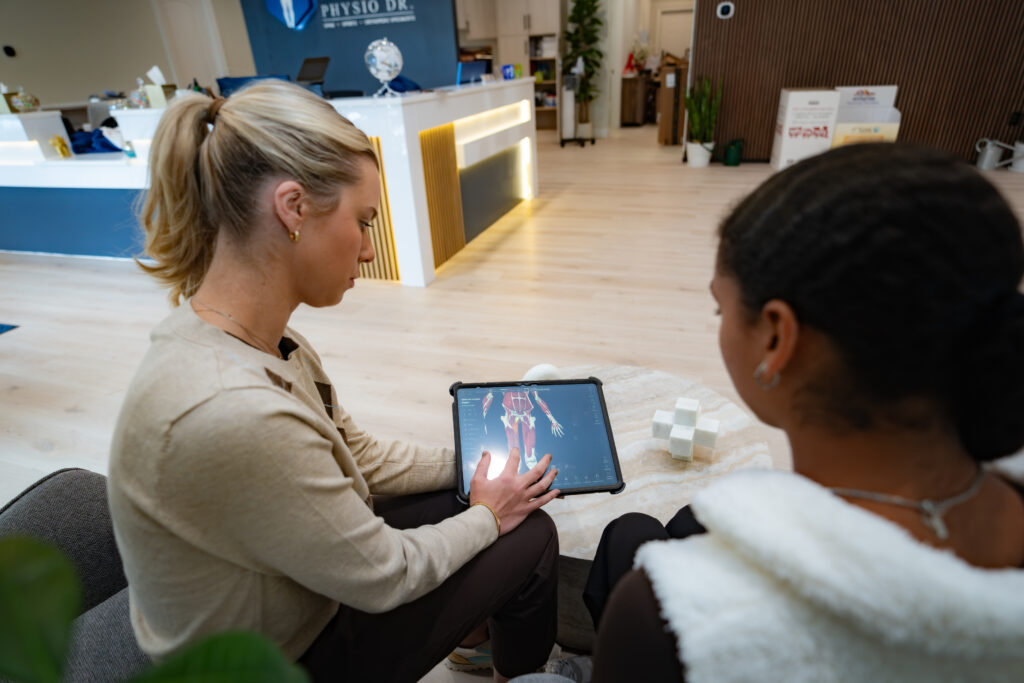
Doctor of Physical Therapy talking through a plan with a patientHands-on treatment for the low backReviewing exam findings together on a tablet

By the numbers

The evidence

What the research says

A Cochrane review of 34 randomized trials (5,121 pregnant women) reported that more than two-thirds of pregnant women experience low back pain. An 8- to 12-week exercise program reduced the number of women reporting low back and pelvic pain (relative risk 0.66) and reduced pain-related sick leave. The authors rated the evidence as low to moderate quality.

Liddle SD, Pennick V. Interventions for preventing and treating low-back and pelvic pain during pregnancy. Cochrane Database of Systematic Reviews, 2015.

A meta-analysis of 106 studies found that prenatal exercise was associated with about 38% lower odds of gestational diabetes, 39% lower odds of gestational hypertension and 41% lower odds of preeclampsia, compared with no exercise.

Davenport MH, et al. Prenatal exercise for the prevention of gestational diabetes mellitus and hypertensive disorders of pregnancy. British Journal of Sports Medicine, 2018.

National guidelines recommend at least 150 minutes of moderate-intensity aerobic activity a week during and after a healthy pregnancy, and note that women who were already doing vigorous activity can usually continue, with their doctor’s guidance.

Centers for Disease Control and Prevention. Physical activity for pregnant or postpartum women.

In a study that followed 300 first-time mothers, abdominal separation (diastasis recti) was present in 33% at 21 weeks of pregnancy, 60% at six weeks after delivery, 45% at six months and 33% at twelve months.

Sperstad JB, et al. Diastasis recti abdominis during pregnancy and 12 months after childbirth. British Journal of Sports Medicine, 2016.

Guidance for health professionals on returning to running after childbirth supports a graded return, with low-impact exercise and strength work first and running from around 12 weeks.

Donnelly GM, et al. Guidance for medical, health and fitness professionals to support women in returning to running postnatally. British Journal of Sports Medicine, 2020.

A scoping review of risk factors for pregnancy-related pelvic girdle pain found that a history of low back pain was a risk factor, which is one reason to address back pain before pregnancy.

Wuytack F, Begley C, Daly D. Risk factors for pregnancy-related pelvic girdle pain: a scoping review. BMC Pregnancy and Childbirth, 2020.

Questions

What patients ask us

Is physical therapy safe during pregnancy?

For a healthy pregnancy, yes. Exercise and hands-on care are adapted to your trimester, and we screen at every visit for anything your OB-GYN or midwife should see first.

Do I need a referral or clearance from my OB-GYN?

You do not need a referral to start. If your pregnancy is high-risk or your provider has given you activity restrictions, tell us, and we will work within them and coordinate with their office.

Can I have dry needling while I am pregnant?

Pregnancy is treated as a precaution for dry needling, not an automatic no. We decide case by case, based on your stage of pregnancy, the area being treated and your comfort, and we always discuss it with you first. Many pregnant patients do well with exercise and manual therapy alone.

Do you treat pelvic floor problems?

We do not perform internal pelvic floor exams or treatment. We treat the back, pelvis, hips and core, and we will refer you to a pelvic health specialist for leakage, heaviness or other pelvic floor symptoms.

How soon after delivery can I start?

You can come in during the first weeks for gentle work on pain, posture and movement. Strength work builds from there, following the guidance your OB-GYN or midwife gives you at your postpartum visit.

Can I see a female doctor?

Yes. Ask for Dr. Mills or Dr. Brannen when you call or text (478) 960-7077.

Not sure this is the right treatment?

That is what your first visit is for. A Doctor of Physical Therapy examines you one-on-one, explains what they find, and recommends a plan built for you. No referral is needed to start.