Pain in pregnancy is common, and treatable
More than two in three pregnant women have low back pain, and about one in five have pelvic pain. Many are told it is just part of pregnancy and will pass after delivery. For some it does. For others it lingers for months.
You do not have to wait it out. In a Cochrane review, an 8- to 12-week exercise program reduced the number of women reporting back and pelvic pain. A Doctor of Physical Therapy can find what is driving your pain and treat it in a way that fits your stage of pregnancy or recovery.
By the numbers
Signs it is time to get checked
- Back, pelvic or hip pain that makes it hard to walk, sleep, roll over in bed or get out of the car
- Pain that started in pregnancy and has not gone away after delivery
- A bulge or gap down the middle of your abdomen, or a core that does not feel like it is working
You do not need a referral to start. If anything in your exam should be seen by your OB-GYN or midwife first, we will tell you.
Common conditions we treat
- Low back pain during pregnancy
- Pelvic girdle pain and sacroiliac (SI) joint pain
- Pubic bone (pubic symphysis) and groin pain
- Hip pain
- Sciatica and pain down the leg
- Abdominal separation (diastasis recti)
- Core weakness after delivery
- Pain and stiffness after a C-section
- Back, hip and pelvic pain that lingers after delivery
Why pregnancy causes pain
As your baby grows, your center of gravity moves forward, the curve of your low back changes, and the muscles of your abdomen lengthen. At the same time, the joints of the pelvis are handling more load than usual. The muscles of the hips, back and core have to work harder to keep you steady, and when they cannot keep up, joints and nerves get irritated.
After delivery, those muscles do not snap back on their own schedule. Lifting, feeding and carrying a baby, often on little sleep, loads a body that is still recovering. That is why a structured return to strength matters.
How we evaluate you
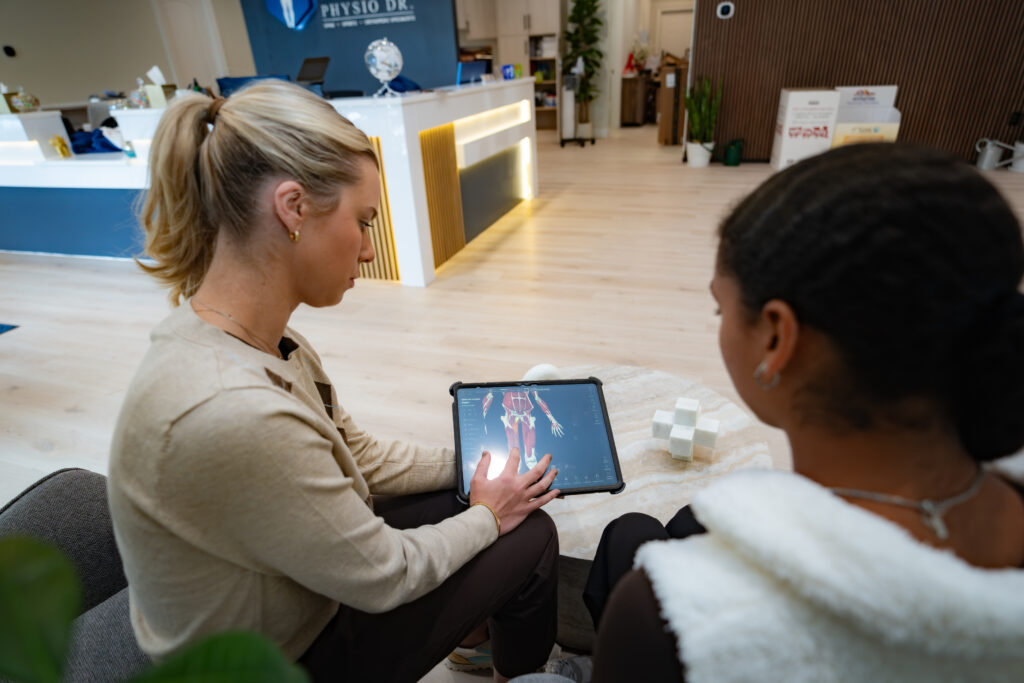
Your first visit is a full hour, one-on-one, in positions that are comfortable for your stage.
Your story and screening
Your pregnancy or delivery, your symptoms, and a screen for anything your OB-GYN or midwife should see first.
Back and pelvis
Which movements and positions bring on your pain, and which joints are involved.
Hips
Strength and mobility of the hips, which do much of the work of steadying the pelvis.
Core and abdominal wall
How your core handles load and, after delivery, a check for abdominal separation.
Nerve check
Strength, reflexes and sensation when pain travels into the leg.
Your day
How you sleep, sit, lift, feed and carry, so the plan fits real life.
Your program
-
Calm it down
Hands-on treatment, and positions and movements that ease your pain, starting at the first visit.
-
Support the pelvis
Stabilizing exercise for the hips, back and core, and a support belt when it helps.
-
Change the load
Easier ways to walk, climb stairs, roll over, get out of the car, lift and carry.
-
Rebuild
After delivery, progressive core, hip and leg strengthening, starting with low-impact work.
-
Return
Strength testing to guide your return to running, lifting and sport.
Treatments that often help
Pain mostly in one area? See Low Back Pain, Hip Pain or Sacrum & Tailbone Pain.
What the research says
A Cochrane review of 34 randomized trials (5,121 pregnant women) reported that more than two-thirds of pregnant women experience low back pain and almost one-fifth experience pelvic pain. An 8- to 12-week exercise program reduced the number of women reporting low back and pelvic pain (relative risk 0.66) and reduced pain-related sick leave. The authors rated the evidence as low to moderate quality.
In a study that followed 300 first-time mothers, abdominal separation (diastasis recti) was present in 60% at six weeks after delivery, 45% at six months and 33% at twelve months.
A scoping review of risk factors for pregnancy-related pelvic girdle pain found that a history of low back pain was a risk factor.